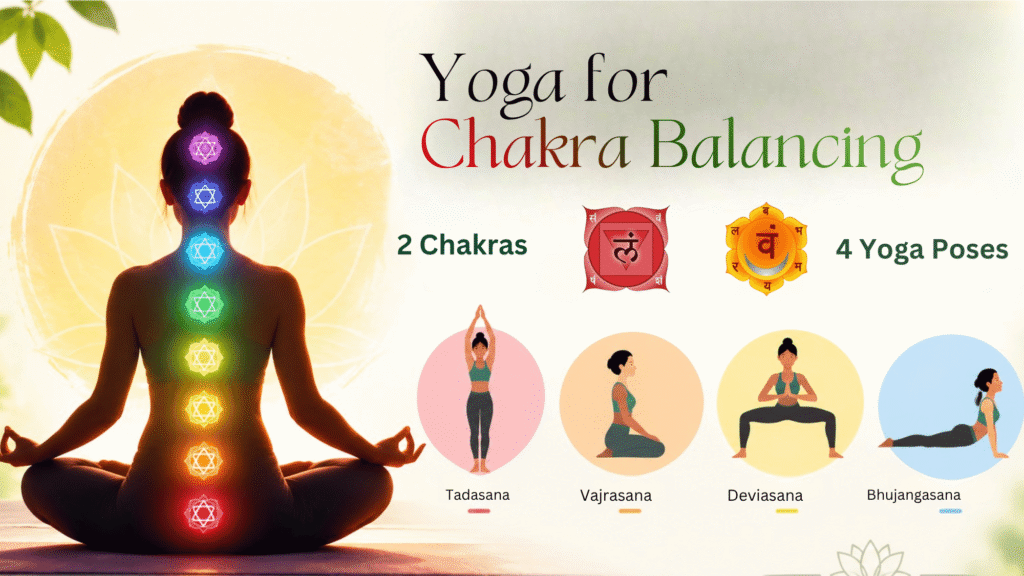
There are twelve chakras in the human body, but primarily there are seven chakras. So in the next blog post we’ll definitely learn about the 12 chakras. In this article we’ll see which yoga poses will be beneficial for activating our seven chakras and we’ll find out how many days in a row we should practice these poses and when we’ll start seeing their benefits.
The seven chakras are centers of various energies in our body. These chakras are responsible for different events in our lives so yoga poses, meditation and certain exercises are performed to activate them.
Each chakra has its own distinct color. Just as there are seven colors in a rainbow there are seven colors for our chakras. In the morning the sun god is offered arka which means water is offered to him. Water is poured from a copper vessel over the head and as the proper mantras are chanted this water is released. When we pour this water over our head the reflection of the sun and water creates the seven colors which then influence our chakras.
So let’s learn yoga poses to heal and make our chakras powerful and strong.
1. ROOT CHAKRA YOGA 🔴
The Root Chakra is located at the base of your spine and is the foundation for all the chakras. If this chakra is not strong all the chakras cannot be balanced. Therefore we must practice the yoga poses for this chakra the most. The Root Chakra is the foundation for all your chakras.
Tadasana (Mountain Pose)
Tadasana means that just as the coconut tree is called “taad” in Hindi (India) you should position your body in the same way.
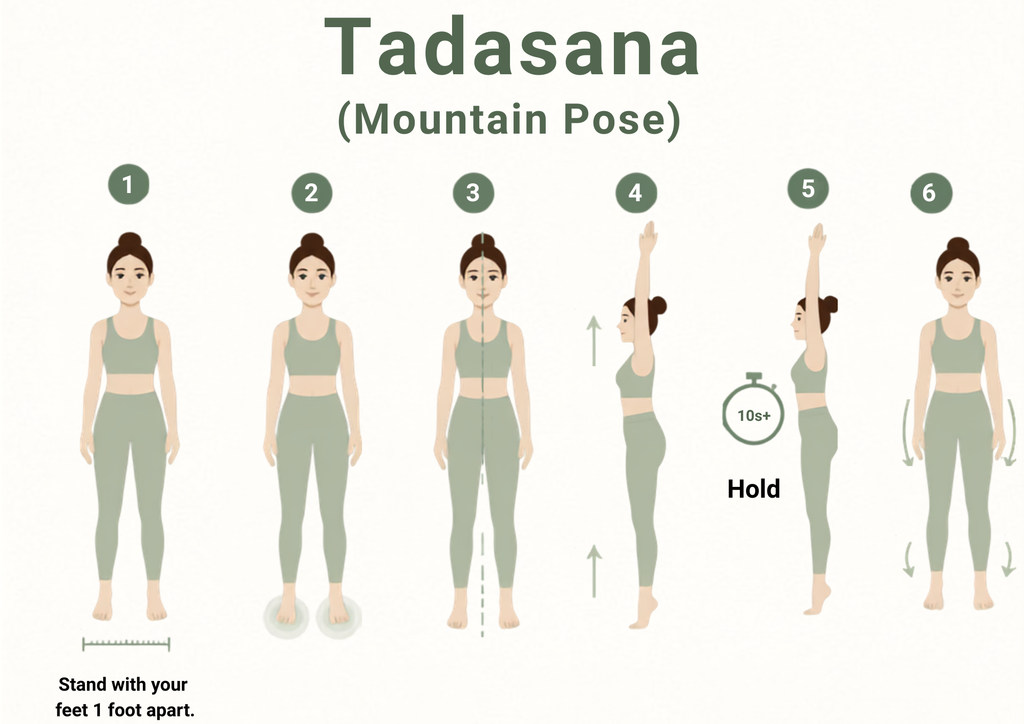
How To Practice Tadasana
- There should be a one-foot gap between both feet.
- The weight should be evenly distributed on both feet.
- While doing this you should keep your spine straight.
- Also you should inhale through your nose lift your heels and raise both your hands up.
- You should hold this pose for at least ten seconds. If you are able you can hold it for longer. While holding the pose you can breathe normally.
- To return to the normal position lower your heels bring your hands down and exhale through your nose.
- To maintain good oxygen levels, you should do Tadasana for at least ten minutes.
Benefit of Tadasana
- Regular practice of Tadasana strengthens the muscles of the legs and feet.
- Stress on the chest and abdomen helps relieve related ailments. Practicing Tadasana also helps reduce tension on the spinal nerves.
- This asana is very helpful for maintaining mental balance. While doing Tadasana the entire spine is stretched and the pelvis is released which strengthens the abdominal muscles.
- Tadasana is important for the physical growth of young children.
- This asana is very helpful for maintaining mental balance. While doing Tadasana the entire spine is stretched and the pelvis is released which strengthens the abdominal muscles.
Vajrasana (Thunderbolt pose)
This is the only posture you can do after eating. it activates the 72,000 nadis (Pulses ) in your human body. Also, in Sanskrit, vajra means “very strong,” and it makes your body very strong.
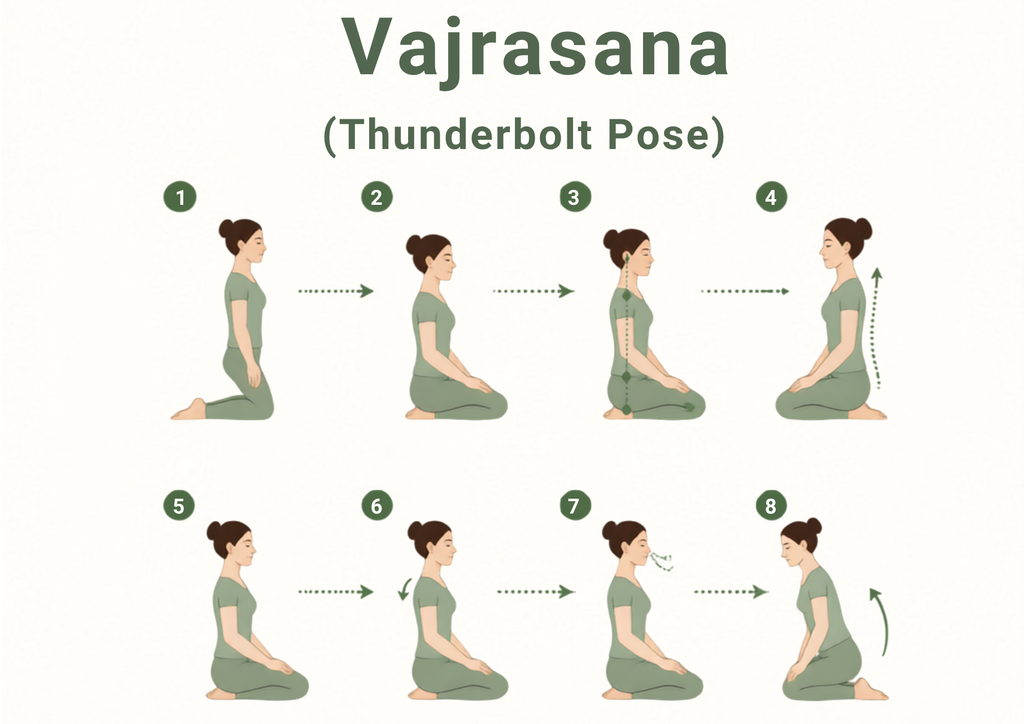
How To Practice Vajrasana
- Place your feet on the floor as shown in figure 1 of the photo.
- Then, sit on your heels as shown in figure 2.
- Keep your spine straight.
- Also place your palms on your knees and breathe normally. Sit for at least two to three minutes, as much as you can.
- You should sit for as long as you are able; the more time you sit, the greater the benefits.
- If you feel too much pressure on your foot ankle, you can also use a collapsible pillow to help you sit for longer. While doing this, blood pools in your abdomen.
- Also to return to the normal position, bring your back and hips into the shape shown in Figure 1, then bring your heels forward and do a little stretching so that you don’t get ants in your legs.
Benefit of Vajrasana
- In the evening before sleeping, people with digestive issues such as gas, acid reflux, indigestion, or heartburn should practice this pose regularly for at least five minutes.
- Reduces back pain.
- Calms the mind.
- Improves posture.
- Additionally, it makes our knee and ankle joints flexible.
2. SACRAL CHAKRA YOGA🟠
This chakra is located above the root chakra and about three inches below your navel, or three finger-widths down. This chakra is about creativity and also generates sexual thoughts in the body.
Deviasana (Goddness Pose)
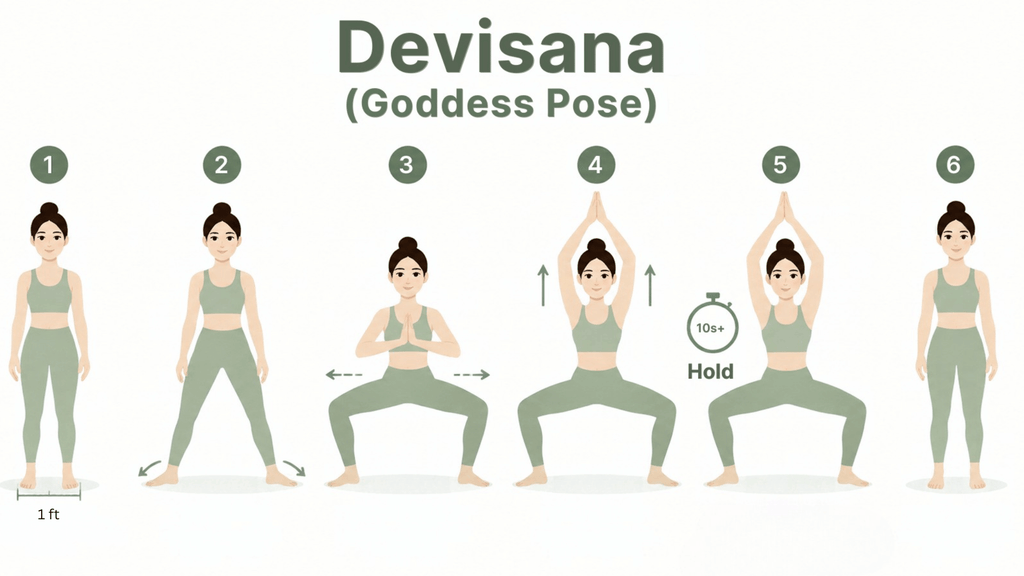
How To Practice Deviasana
- First, stand with your feet slightly apart show in figure 2.
- Now, move your left foot to the left and your right foot to the right, and bend your knees show in figure 2.
- Keeping your knees bent, bring both hands up to shoulder level and slowly make the namaste pose show in figure 4 hold it atleast 10 sec.
- Then after breath out and take normal pose show in figure 6.
Benefit of Deviasana
- During the second and third trimesters of pregnancy squats performed correctly can help prepare for childbirth.
- They help improve the body’s balance and coordination.
- This can help strengthen the spine and surrounding muscles.
- When performed with proper posture it can help maintain the spine’s alignment.
- The blood supply from the waist down is good.
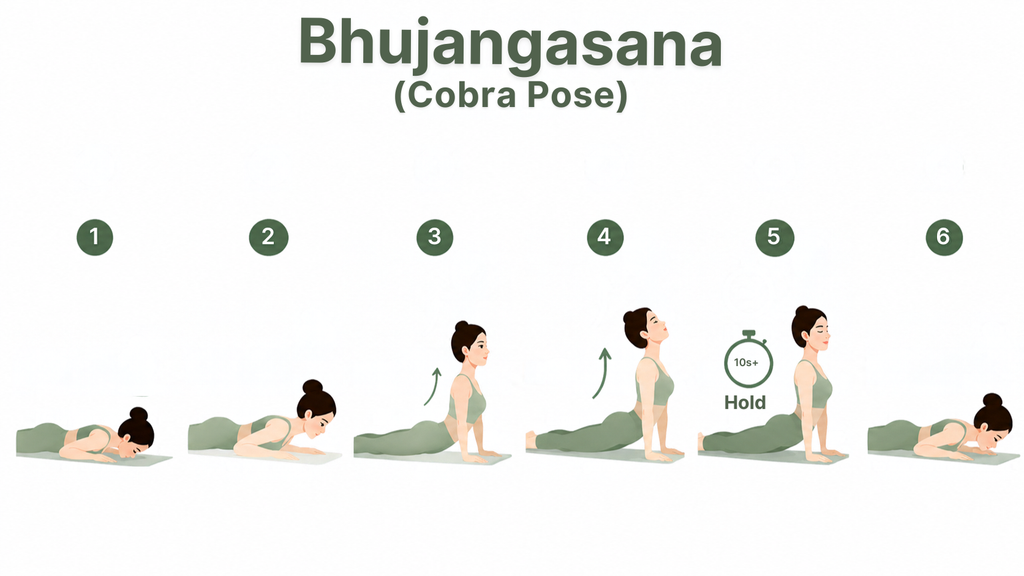
Bhujangasana (Cobra Pose)
Bhujangasana means the Indian cobra which raises its hood and stands upright similarly in this pose you are meant to lift your head. That is why this asana is called Bhujangasana.
How To Practice Bhujangasana
- As shown in figure 1 lie on your stomach. Then place the soles of your feet on the ground and also place your hands on the ground, with your palms by your chest.
- Next, as shown in figure 2 you should lift your head up like a snake.
- You should lift your head as high as you can, as shown in figures 3 and 4 . While doing this, you should inhale.
- As shown in figure 5, you should hold this position for at least ten seconds, and your focus should be on your breathing. Your breathing should be normal. You can hold the pose if possible.
- As shown in figure 6, you can release the breath and return to the normal position.
Benefit of Bhujangasana
- This pose will be very useful for relieving fatigue in your body.
- This pose strengthens the spine and also strengthens the muscles around it.
- This pose can be beneficial for those who sit for hours in the office and have back problems.
- It activates the lower part of the body from the waist to the down.
3. My personal Experience and Tips
- We need to do each Asana for 21 days or 40 days with regularity following continuation in time also.
- Specifically, the morning time will be great for Asana as each give more energy throughout day and mood remains fresh with positive vibes.
- Before starting to do each asana take long breath and at the ending of asana long breath out.
- During doing root chakra concentrate yourself at the base of the spine, feel red colour and focus on breathing.
- During doing sacral chakra concentrate yourself at the lower abdomen, feel orange colour abd focus on beathing.
- During doing asana stretch yourself as much as possible.
- In any posture, if you hold that position for two and a half hours (150 min) you will master that pose.
If you want to know more about 7 chakras read from below article.👇
Read More: Your 7 Chakras: What They Mean, How to Find Them, and What Happens if They’re Blocked.
In the next blog we will see that you can read the next three chakras by clicking on this link.👇
Read More : Yoga Asanas For Chakra Balancing (Part 2)
In this blog there are 2-2 yoga poses for the remaining chakras, and 1 pose that’s beneficial for all chakras. If you’re short on time, you can practice this pose.👇
Read More : Yoga Asanas For Chakra Balancing (Part 3)