
Introduction:
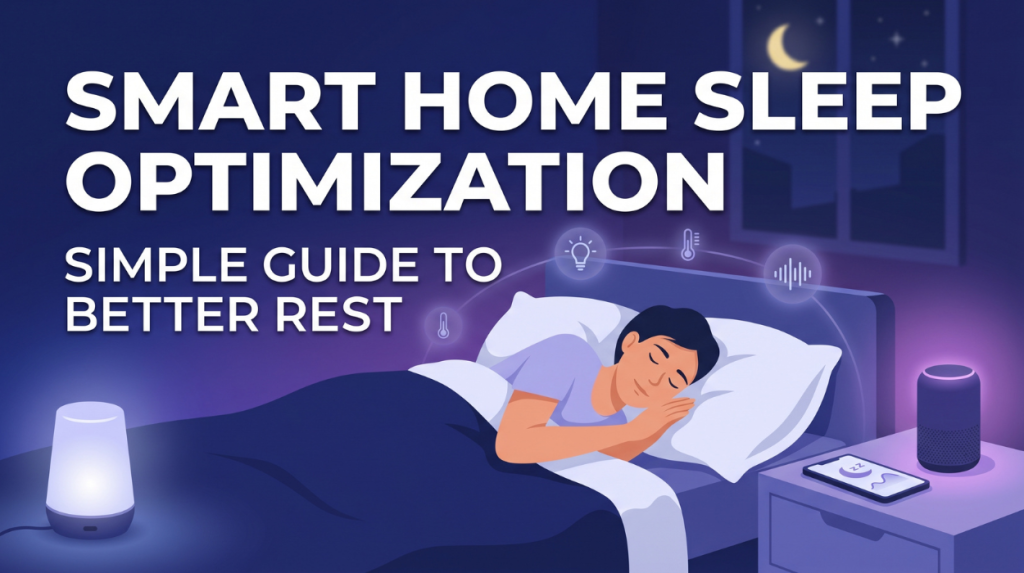
A smart home for sleep Optimisation is not just about gadget it’s about creating and environment that works with your body natural rhythm. By automatic lighting temperature sound and routines you can significantly improve how quickly you fall a sleep and how will you stay a sleep.
In this complete guide you will the learn how to build a smart sleep environment step by step using crucial Strategies and modern automation.
Why sleep Optimisation matters?
Before knowing more about the Technology its important to understand by sleep Optimisation is very important.
Quality sleep important for:
- Improved memory and cognitive
- Performance battery emotional Regulation and reduced stress
- Stronger immune system
- Increased a productivity and focus
- Lower risk chronic diseases
Unfortunately modern lifestyles disrupt natural sleep cycles through:
- Excessive screen exposure
- Irregular sleep schedule
- Artificial lighting
- Noise pollution
- Temperature imbalance
Smart Home Automation addresses these issues systematically.
How to improve sleep quality using Smart home Technology?
Improving sleep is not about one single change its about controlling multiple environmental factors together.
Why sleep qualities poor today?
Before fixing sleep it’s important to understand the problem:
- Too much exposure to blue light
- Irregular sleep schedule
- High room temperature
- Noise disturbance
- Poor air quality
Smart homes solve this issues by automatiing your environment.
How smart homes improve sleep
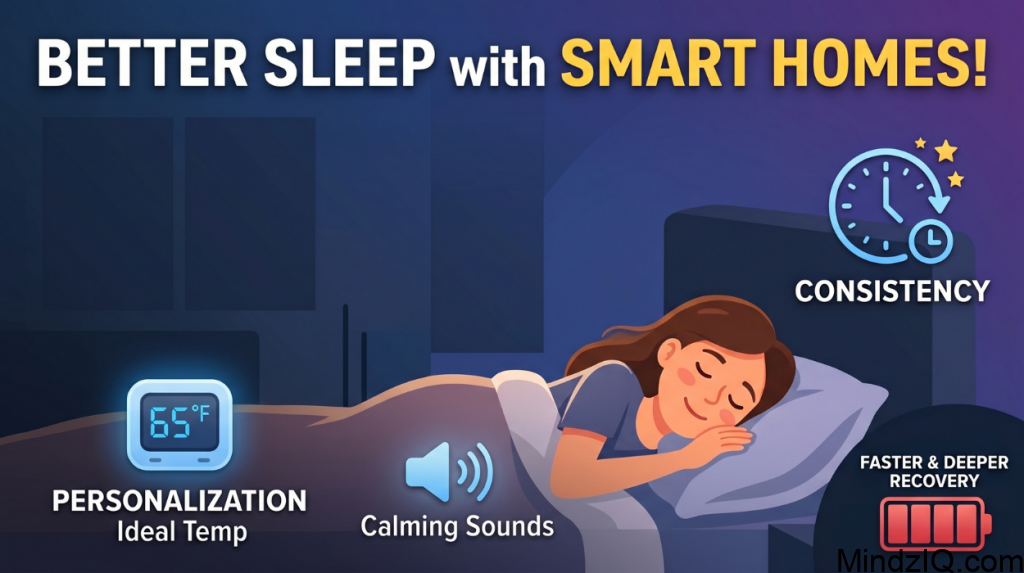
Smart Technology work in 3 key ways
1. Automation
Your home adjust automatically without effort:
- Lights Dim at night
- Temperature lowers before sleep
- Sounds become calming
2. Consistency
Your body loves routine. smart systems:
- Maintain sleep schedules
- Trigger bedtime and wake up Routines.
3. Personalisation
Your environment adopt to your preference
- Ideal lighting tones
- Preferred room temperature
- Customised sound settings
Results: faster sleep, deeper sleep and battery recovery
Best smart lighting setup for better sleep
Lightings is most powerful factor affecting sleep quality.
How light affect sleep
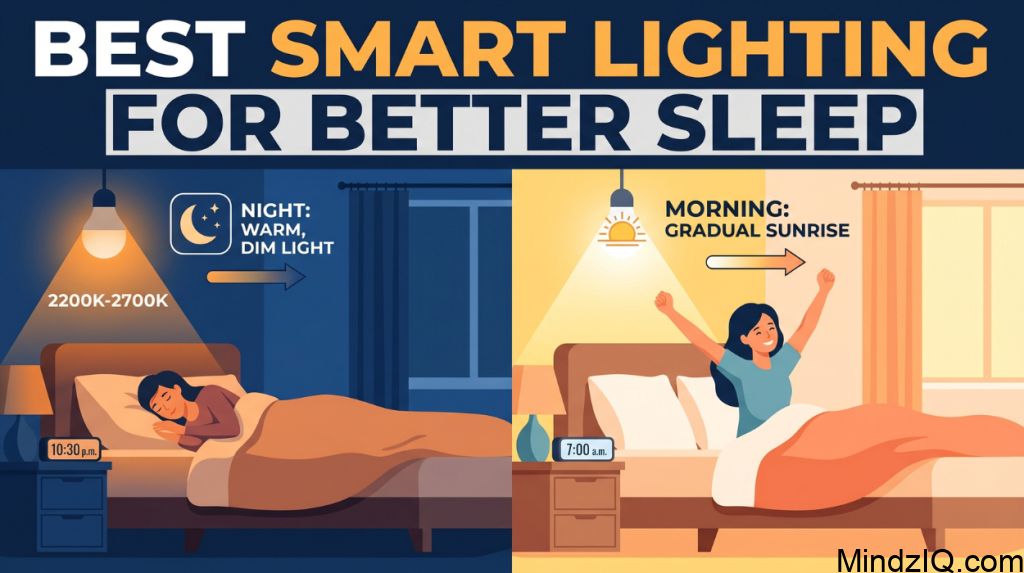
Your brain uses light to decide when to sleep and wake up. Bright white or blue light-keeps you awake. warm dim light-signals sleep
Blue light reduces melatonin the hormone responsible for sleep.
Best for sleep
1. Use worm light at night
- Colour temperature:2200K-2700K
- Create a relaxing environment
2. Gradual dimming
- Instead of turning lights of suddenly:
- Dim lights slowly over 30-60 minutes
- Mimics natural sunset
3. Morning light simulation
- Lights gradually brighten In the morning
- helps you wake up naturally
- smart lighting automation idea
Set a routine like this:
- 9:00 p.m.-lights dim to 50%
- 10:00 p.m.-warm tone activated
- 10:30 p.m.-lights turn off
This trains you are brain to prepare for sleep
Ideal bedroom temperature for deep sleep
Temperature plays a critical role in sleep quality
Best temperature for sleep
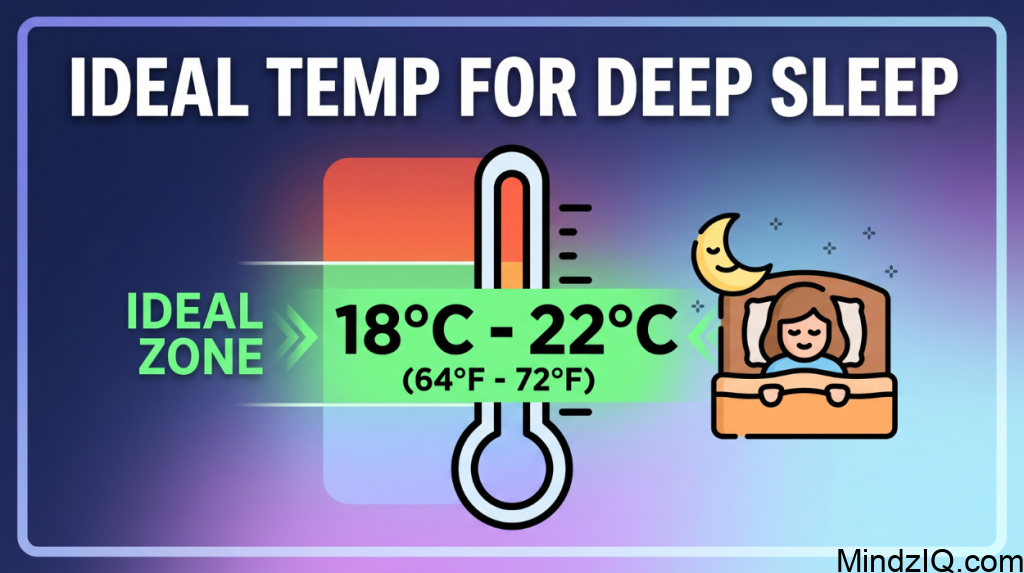
The ideal range is:
18° cto 22° c(64 ° F to 72° F)
Why temperature matters?
Your body will naturally comes in normal mode before you sleep. If you are room is too warm:
- You fill restless
- You wake up frequently
Smart temperature Optimisation
1. Pre cooling the room
Lower temperature 30 minutes before bedtime
2. Gradual morning warm up
Increase temperature slightly before waking
3. Adaptive control
Automatically adjust bassd on weather report
Even one or two degree change can improve sleep significantly.
Read More: Smart Automation for Offices and Small Business.
Best smart home devices to improve sleep
You don’t need dozens of gadgets. Focus on high impact devices.
1. Smart lights
Control brightness and colour
Automatic bed time lighting
2. Smart thermostat
Maintains ideal temperature
Reduces sleep interruptions
3. Smart speakers or sound system
Play white Noise or calming sounds
Mask external disturbance
4. Sleep tracking devices
Monitor sleep cycles
Provide insights for improvement
5. Smart curtains
Block light at night
Let natural light in during morning
6. Air purifier and humidifier
Improve breathing
Maintain ideal humidity
Smart mattresses and sleep tracking
Understanding your sleep pattern is key to improvement
Features of smart sleep devices:
- Sleep cycle tracking
- Heart rate monitoring
- Movement detection
- Snoring detection
Benefits:
- Identify sleep disturbances
- Optimise routines based on data
- Improve long term sleep habits
What to avoid:
- Too many apps
- Complicated setup
- Unreliable devices
Keep your system simple and effective
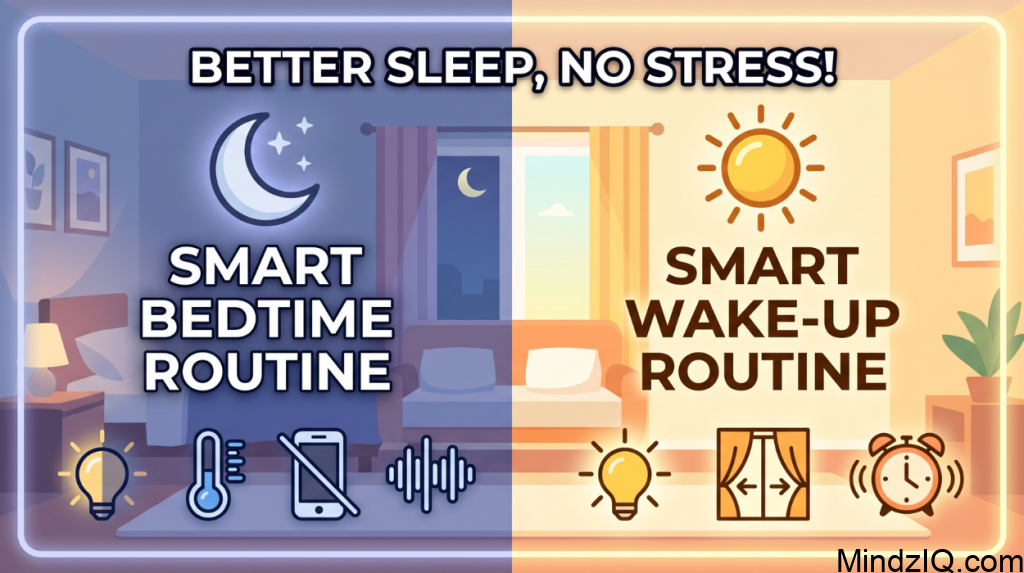
Smart bed time routines that works
A good sleep routine is more important than any device.
Why routine matters?
- Your body follows patterns without consistency
- Sleep becomes irregular
- Quality drops
Perfect smart bedtime routine
1 hour before sleep
- Lights
- Screen reduces brightness
- Calm music starts
30 minutes before sleep
- Temperature lowers
- Curtains close
- Notifications turn off
At bed time
- Lights of automatically
- White Noise starts
- Phone switches to silent mode
smart wake up routine
- Lights slowly Brighten
- Curtains open
- Gentle alarm plays
This creates a natural and stress free wake up experience
How to reduce screen time before bed
Screen exposure is one of the biggest reason for Poor sleep.
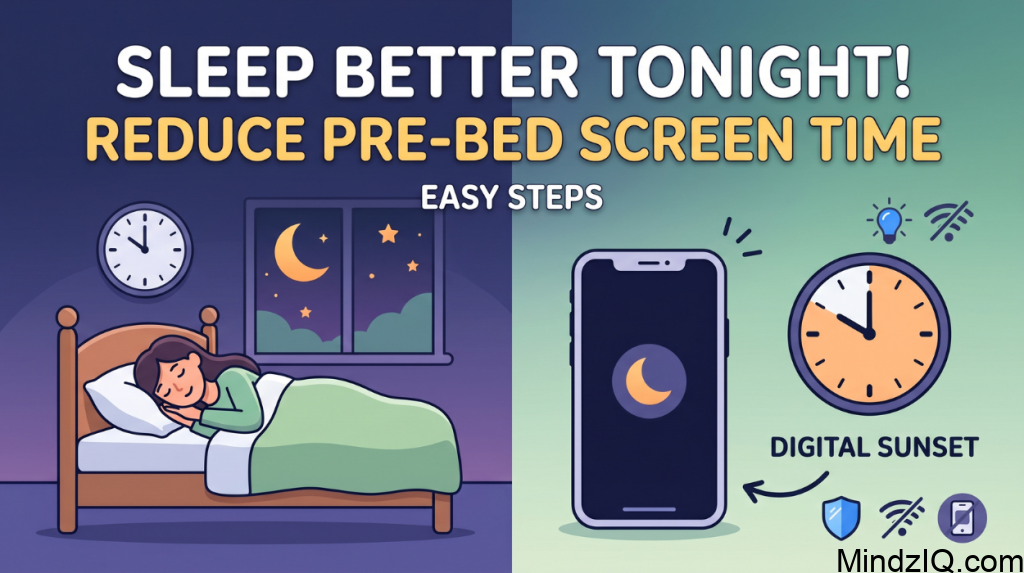
Why screens affect sleep?
- Blue light suppresses melatonin
- Keeps brain active
- Delays sleep on set
Smart solutions to reduce screen time
1. Automatic night mode
Enable blue light filters
2. Wi-Fi scheduling
Turn off Internet at night
3. App blocking
Limit access to distracting apps
4. Notification control
Silence alerts after a certain time
Best practices
Create a digital sunset
Stop screen uses 30-60 minutes before sleep
Common mistakes that ruin your sleep
Even with smarter Technology, mistakes can reduce effectiveness
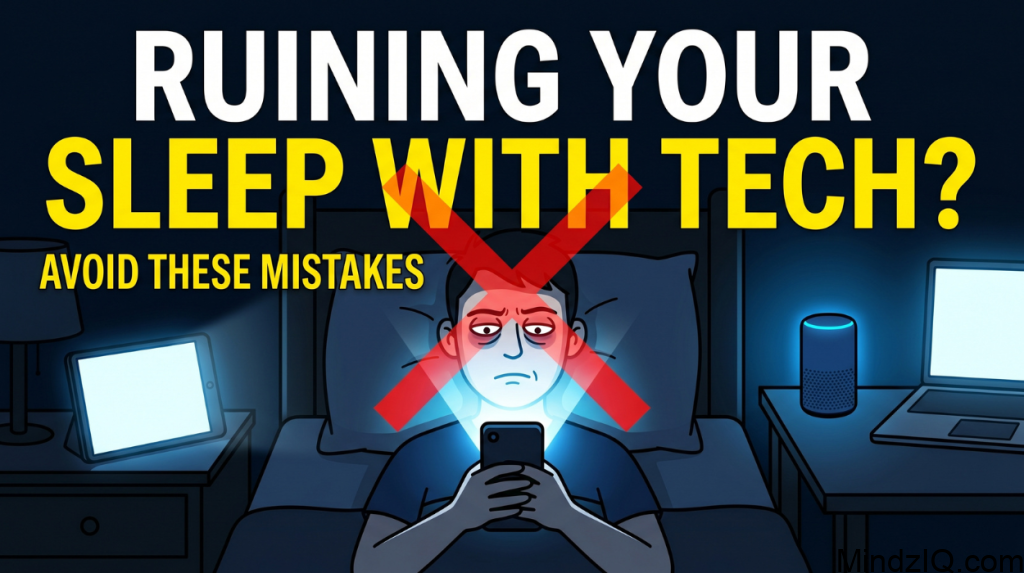
1. Over automation
Too many Automations create confusion. Keep it simple.
2. Ignoring manual control
Always have backup control options
3. Using bright lights at night
Even smart lights can harm sleep if used incorrectly
4. Poor routine consistency
Automation only works if you were schedule is stable.
5. To many devices
More devices is not equal to better sleep
Focus on quality not quantity
6. Ignoring air quality
Poor Air is equal to poor sleep
Advanced tips for maximum sleep Optimisation
1. Combine multiple factors
Best results come from combining:
Light + temperature + sound
2. Track and improve
Use sleep data to:
Identify pattern
Improve habits
3. Keep bedroom minimal
Less clutter= less mental stress
4. Use natural elements
Fresh air
Natural light
Quite environment
Future of smart sleep Technology
Smartphones are evolving rapidly.
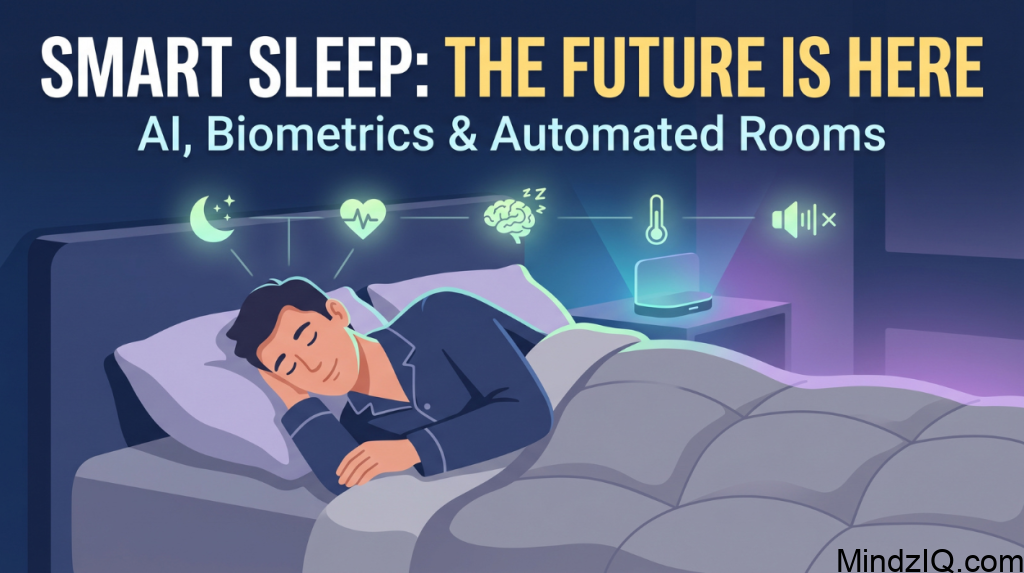
Coming next:
- AI based sleep recommendations
- Fully adaptive environments
- Biometric based automation
In the future your home will detect when you are tired. Automatically prepare your room for sleep. The future of smart sleep technology is moving toward fully automatic intelligent, environment that adapt to your body in real time. Instead of Manual settings or fixed schedules, upcoming systems will use advanced sensors and AI to monitor your sleep pattern, heart rate, breathing and you are stress level throughout the night.
These Systems will automatically adjust lighting temperature and sound based on your sleep stage. For example, your room may cool down during deep sleep, reduce noise disruption and gently brighten the lights as you approach waking.
Another major trend is integration with wearable devices and biometric tracking. Smart homes will think with sleep trackers to provide personalised recommendations and improve long term sleep quality. Privacy focused solutions will also grow, allowing users to control data locally without relying on cloud system.
In the near future smart bedrooms will become proactive rather than reactive predicting when you need rest and preparing the environment automatically. This evolution will make better sleep more accessible, helping people improve health productivity and over all well being through Technology.
Conclusion:
Smart home for sleep automization is not about luxury it’s about creating a healthy life style. By controlling lighting temperature sound and routine you can transform your bedroom into a powerful sleep enhancing environment.
Start simple:
- Adjust lighting
- Set a bed time routine
- Optimise temperature
- Then gradually upgrade your system
Better sleep leads to better health better focus and better life. Smart home sleep optimization is transforming how we Rest by creating environments that work in harmony with our natural rhythms. The key is balance using Technology voice give to support not replace healthy sleep routine.
Frequently asked questions:
1. Can Smart home Technology really improve sleep?
Yes by controlling environmental factors like light temperature and noise
2. What is the best smart device for sleep?
Smart lighting can be considered as most important device for sleep
3. Is a smart sleep setup expensive?
Ofcourse No! You can start firstly with basic devices and later can add
4. In how many days results can be shown?
Improvement is based on people to people but can show results in week.