Introduction
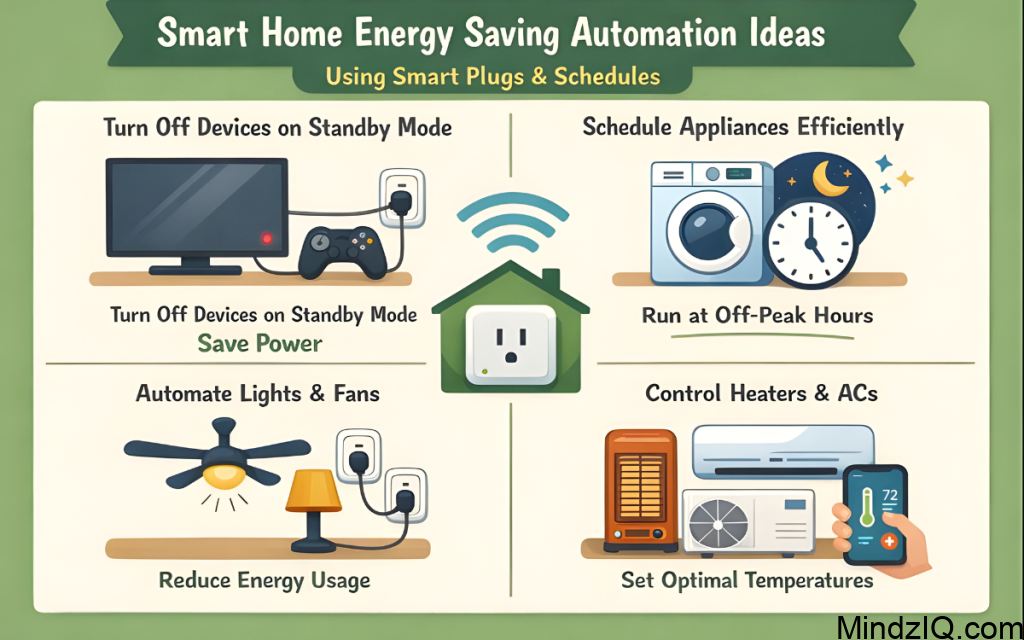
Smart home energy saving automation ideas using smart plugs and schedules will help you to make your home more smart. It doesn’t take long in this day and age to find yourself in a tight spot. You open the utility bill for months past, your eyes run down to the total, and your jaw drops. “Do we even possibly consume that much power”, you ask yourself. Under the influence of dark monetary fears, you wander through the house and look at the players who are likely suspects the dryer, dishwasher turntable, even maybe that conditioner that just ran too long last night.
More often than not, it is the big appliances actively in use that are doing the misdeed. It’s articulate, insects like devices buzzing softly in the background, pulling electricity even while they appear to be dozing. This phenomenon improperly labeled “vampire power” or “phantom load” explains a surprising portion of your monthly overhead.
On the bright side, you don’t have to go around like farmer from the end of colonial era in order to fix it; you just have to work smarter!
Enter the humble smart plug. Inexpensive and snap to install and paired with the right retrofits, this little gizmo turns your home from a garbage grabbing consumer of energy into a model of efficiency. This guide will walk you through exactly how to use clever plugs to automate your savings, grinding away that carbon footprint one kilowatt at an advantageous time, and make your home work for not against you in life.
High-Impact Automation Ideas
Now that you’ve read the preface, let’s see some examples of things it can do. Where will your money do the most good? Here’s four things smart plugs are really great at.
Lighting: The Low Hanging Fruit of Energy Efficiency
Old and outdated, one of the earliest energy sins is forgetting to turn off lights. We nag our kids to switch off the light when they leave a room, and yet we so consistently forget.
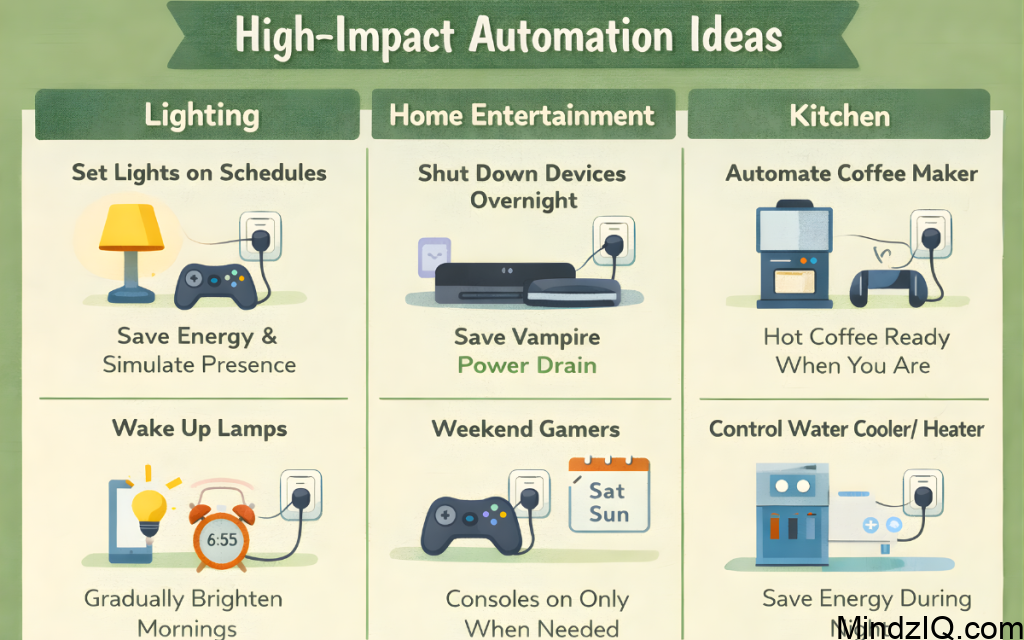
- A ‘Lived-In’ Look :You can go away for a week without having to leave a light on 24/7 (what waste). Set these to the “Random” model option, so that for instance lights turn on and off at random times between sunset and bedtime. The result is a simulation of human presence.
- The Morning Nudge :Wake up instead to a bedside lamp, set to turn on five minutes before your alarm. The end result, of course, is you gradually wake up and no one else’s alarm clock gets turned off because yours was the one that went off first.
Taming Your Home Entertainment Center
The entertainment center is probably the No. 1 vampire power sucker in your home. From game consoles to sound bars and subwoofers, if it’s in the “standby” state, all those devices can power on two seconds faster because they are already drinking a bit of juice.
- Night Shift: Evict the entire power strip (or just some of the real big hitters, if you unplug them without cutting off anyone’s life support with a smart plug. Set it to cut power entirely at 1:00 a.m. (or whenever you’ve definitively finished watching TV), and turn the TV back on at 5:00 p.m., when you get home from work.
- The Gamer’s Schedule: Player don’t play until the weekend (cause school and stuff) so why is my console powered on at 10 a.m. Tuesday morning? Keep it “live” throughout your regular time slots.
The Kitchen: This is standard Kitchen Efficiency
The kitchen contains appliances which carry out certain frequently timed tasks and need to be constantly plugged in.
- The Coffee Pot: Here’s an oldie but goodie smart plug use case. Put water and coffee in your coffeemaker the night before, use a smart plug to have it turn on 10 minutes before you wake up. The machine thinks it’s been plugged in for the first time and begins the brewing process. Program it to turn off an hour afterward, and you’ll never have question like did I leave the stove on? panic about the coffee pot.
- Water Coolers/Heaters: If you have a freestanding water cooler that both heats and cools your water, the appliance is operating 24-7 to maintain a desired temperature. But you don’t need hot water at middle of the night. So, its better to turn off at night and turn on one hour before you woke up. hence you will get warm water when there is need. So, it will save the energy.
Level up your process ! Innovative automated techniques
As your company grows its needs expands, things may become much more complicated. At this point that smart home becomes actually smart.
Voice Integration
Almost all of our recommended plugs support Amazon Alexa or Google Assistant, and some are compatible with Apple HomeKit. It is also possible for the energy saving to take place on the fly.
If you leave before the scheduled time, just say: “Alexa, goodbye.” Now this whisper only command, implemented in an Alexa Routine through the Alexa app. It will turn off all the smart plugs in your house at once. This way there is no need to wait according to your schedule. The savings are immediate and all up front.
IFTTT Potential Benefits
IFTTT (If This Then That) is a service through which different devices and apps can talk together so information is shared automatically.
Geofencing: You can track the location of your phone by using this system. If you leave a 100-meter zone of your house, then switch off the smart plug controlling air conditioner. Unlike time based scheduling which would never work on irregular schedules, it’s much better.
Weather as Trigger: If there is any change in whether your device can work automatically. For ex. If temperature goes under 60 degrees outside, the smart plug connected to the space heater can turn on the heater. So, you don’t have to do it manually.
When Things Go Wrong: Getting Your Business Back on the Track
Technology is not perfect sometime it may get fail but let’s see what is wrong and how can we fix this.
The “Offline” device: Sometime Plug may be fall to connect to wi-fi. This usually happens if your router is busy overloaded; or cause the signal is weak in that corner of the house. Fix: Next, try moving the plug closer to the router. If it works there and not in its previous position you should need wi-fi extender for better signal.
Schedule Drift: Sometimes, when the power goes out, the inner clock on the device gets messed up. Fix: Open the app and resync the device’s time. Usually you only need to fire up the app in order for it to sync.
Overloading: If a smart plug keeps clicking off or feels hot, you are pushing too much power through it. Fix: First, find out what the amperage rating is for your plug (usually it will be 10A or 15A) and how many watts your device takes. You should never plug a high draw device like a space heater into a low rated plug (otherwise the plastic on the socket itself can melt).
Read More : Air Filter vs Air Purifier – What’s the Difference & Which One Do You Need ?