Introduction
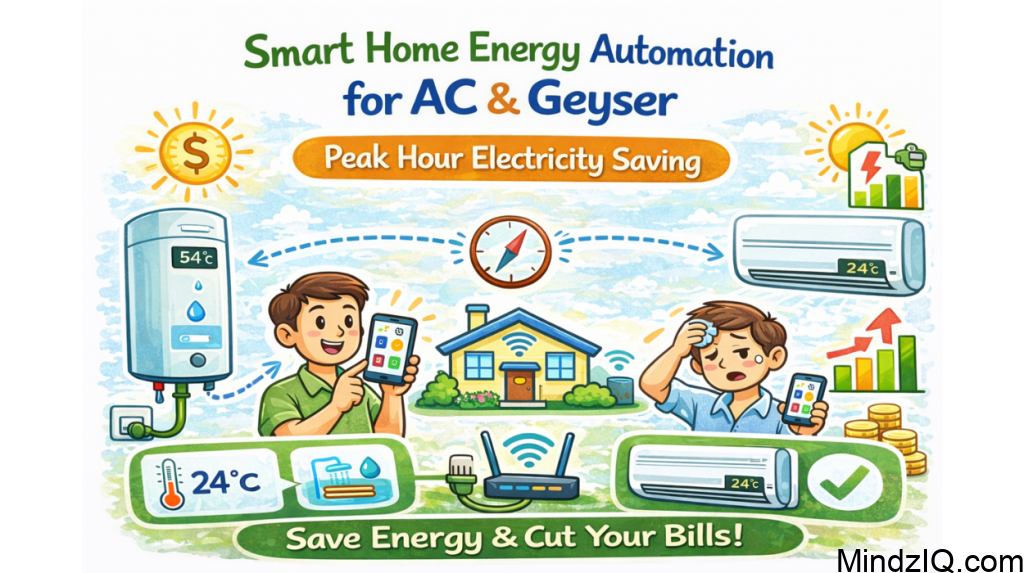
Peak hour electricity can seem like a trap. You aren’t using any “extra” electricity, but your bill creeps even higher because the biggest electricity guzzlers in your home your air conditioning and geyser (water heater) are likely running when power is at its most expensive.
Here’s the good news that you don’t have to stop using your air conditioning or hot water to cut costs. You simply need to deploy them smarter.
That’s where smart home energy automation comes in. It’s not going to magically make your electricity price less. Instead, it cuts your waste, moves heavy usage to off peak times and ensures that appliances run only when you need them.
In this article, I’ll tell you how to do that in a simple and practical manner by setting your AC and geyser on auto timers to reduce peak hour electricity consumption but also improve the quality of life.
The Problem with the Hour of Power
Peak hours are peak because that’s when we all get home, cook dinner and hit the lights, AC or hot water. Time of Use (TOU) billing is employed by electricity providers in most countries. That means:
Off peak hours are cheaper and Peak hours cost more
Peak usage still matters because
- Load increases when heavy appliances are simultaneously operated
- It may drive up your demand charges (in some configurations).
- It stresses your wire and can lead to tripping
So “going without electricity” is not the goal. The aim is to shift the demand for electricity used at peak hours.
Why to go for AC and Geyser as the Best Appliances to Automation
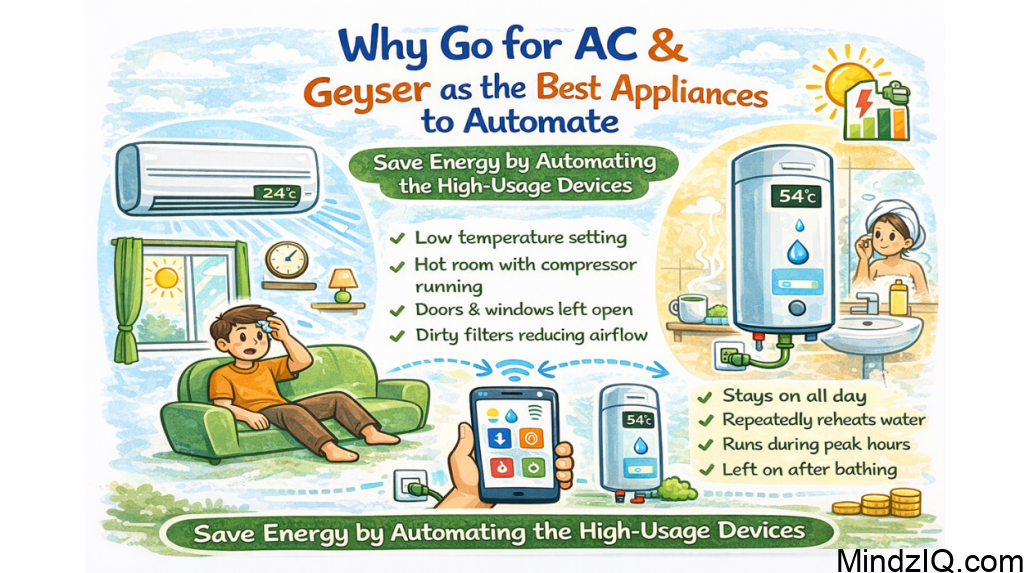
If you’re looking for real savings, it’s the appliances that are using the most energy that you’ll need to tackle. That is why AC and geyser are ideal.
AC (Air Conditioner)
AC sucks up energy, particularly when:
- You turn it so low
- The room is hot and the compressor runs all the time
- The doors and windows are frequently open
- Filters are dirty, reducing airflow
- In summer months, during peak evenings, the AC often uses the most electricity.
Geyser (Water Heater)
At its most basic, a geyser is nothing more than an overly powerful heating coil. It’s energy-intensive: Heating water is no joke when it comes to electricity consumption.
Most geyser wastage happens when:
- It stays ON all day
- Reheats the water over and over
- It operates in peak hours “in case there’s something to be done”.
- People forget to switch it off after their bath.
- When you air seal and insulate these two loads correctly, you’re likely to see tangible savings.
The Smart Solution: AC and Geyser Automation
And now that we know what the problem is, let’s discuss how smart home automation can assist. It is a simple solution, instead of turning off your appliances during peak hours and manually doing so, or dealing with high electricity bills ,technology does it for you. Schedules these devices to consume energy when the cost of that energy is at its lowest. Not to mention you’ll comfortably reduce your peak hour demand, by linking your air conditioner and geyser with your Home Automation solutions.
Smart AC Control
Now pretend you’re about to head home from a long day and you know it’s going to be hot. You don’t want your AC to be off, but you also don’t want to use more electricity than necessary letting it run during peak demand. A smart thermostat saves the day. You can program it to pre cool your home on the way home from work, so you won’t have to crank up your AC at peak power during a heat wave. Plus, some smart thermostats learn your patterns and can program themselves too, so that your home remains toasty warm without blowing through all of your cash.
There’s also a geofencing feature that can use your phone’s location to sense when you’re near home and adjust the thermostat accordingly. When you leave, it can turn the AC off or to an energy saving setting. That way, you’re not wasting energy to cool an empty house. The good news is you don’t have to give it a second thought your AC system will handle it for you.
Smart Geyser Scheduling
Even for geysers, the answer is just as straightforward. Most of the smarter geyser systems will let you program a timing schedule for when it should heat water, so that you can heat water only during off hours. For example, you might set your geyser to power up before 4 AM so that it’s ready with hot water when you wake up without being switched on during costlier peak hours. Likewise, you can have it turn off after your standard time spent showering and avoid any unnecessary uses of water.
Smart geysers can also be linked to your mobile phone and temperature settings remotely managed. So even if you inadvertently leave the geyser on, you no longer have to sweat just use the app to turn it off from wherever. That way, your geyser will only work when you need it to reducing electricity usage and your utility bill.
Read More:Smart Home Fail Safe Automations for Power Outage and Internet Down.
Integrating Smart Energy Management Systems
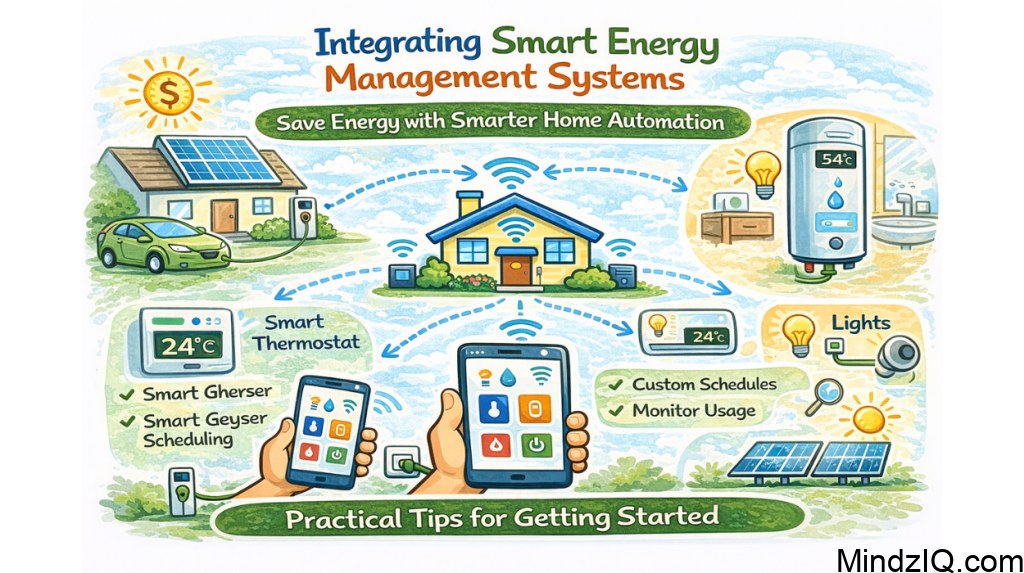
If you want to capitalise on energy saving possibilities, it could be wise to install a smart energy management system. It can control all the appliances in your home, including air conditioning, lightings, geyser and other devices. You can program them to automatically save energy throughout your home, at times when you need it the most and when appliances are in use.
Using it, you can create specific time of use schedules, monitor electricity use in real time and even receive alerts if something’s been left on accidentally. As an advanced feature, some systems can be linked with renewable sources of energy like solar panels to further limit the use of grid electricity during peak hours.
Practical Tips for Getting Started
If all smart home devices are new to you and may feel complicated but this is not that much complex as it sounds Below are the some things you should do:
Replace Smart Thermostat: The first thing to do is yank your old thermostat out of the wall and replace it with a smart one in order to save energy, such as operating AC during peak demand time. The majority of models work with both iOS and Android devices, meaning that you won’t be forced to go without being able to set the temp in your home just the way you want it.
Smart geyser Scheduling : You don’t have the smart one schedule feature as integrated into them today. May be you could add a few smart geysers where in you can monitor the temperature from outside and turn on off.
Custom schedules : Listen to wake up sounds during certain times of the day and a different set of alarms music or relaxing sounds at night. For instance you can run the AC only during very early hours or late in the night and your geyser an hour or two before the normal time to get up and just as soon as you enter your house.
Monitor Your Energy Usage :Some smart home systems can also monitor your energy usage and show you where the most electricity is being consumed. That way, you could switch your devices’ schedules around when they are being energy hogs.
Renewable energy: Install solar wherever you can. You can then literally lower your carbon footprint and somewhat determine when you get to use energy (say, providing some appliances as we’ve described with solar during a relational off peak time).
Benefits Beyond Cost Saving
The advantages of smart home automation are far reaching beyond saving money.
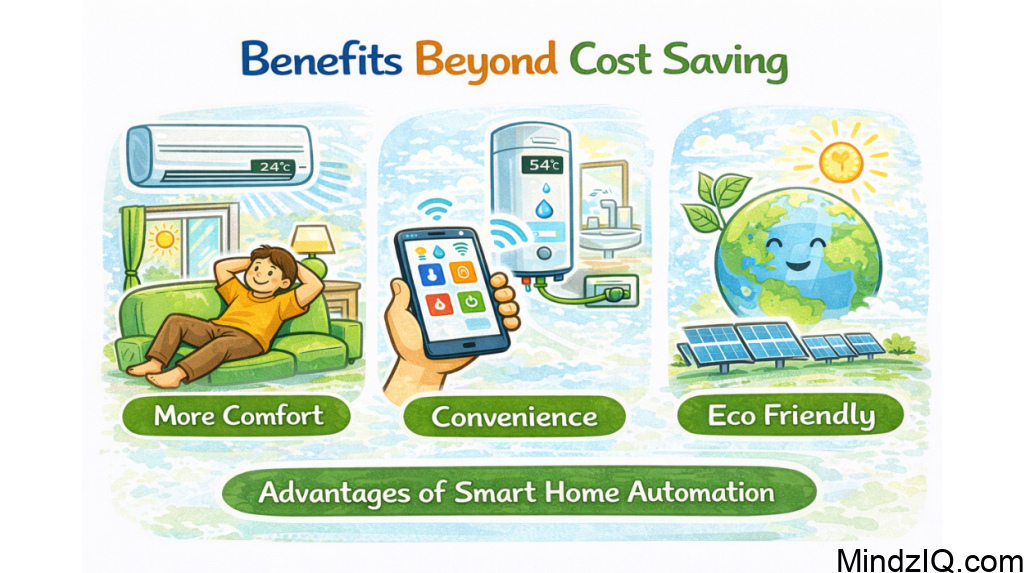
More Comfort: Your home will always at the good temperature when you arrive. There is no fussing with settings or running anything during off hours.
Convenience: You don’t have to remember anything, as your appliances will do the thinking for you once they’re scheduled. Your AC and geyser will automatically be turned on according to your requirements, you can also control them remotely through your smartphone in case you forget to turn it off, or wish to welcome you with a hot water shower.
Eco Friendly: Saving energy is not only easy on your wallet it benefits the planet as well. Reducing the amount of power you use at peak hours then decreases the strain on that power grid, which ultimately reduces greenhouse gases.
Conclusion
When it comes to cutting peak hour electricity usage in the home, smart energy automation is a game changer. Optimizing the use of high energy appliances such as AC and geyser can help you save money without compromising on comfort. Smart appliances enable you to program billing around your energy consumption your machines (dishwasher, washing machine and dryer) operate optimally in terms of power usage only when it’s necessary.
Integrating smart technology into the home can be as small scale as popping in a smart thermostat or shunning outdated geysers in favour of intelligent ones. The right technology will enable you to make your home more energy efficient, save on electricity costs and also go a long way in making the world a greener place without having to compromise on the comfort and convenience that you have become accustomed to.