Introduction
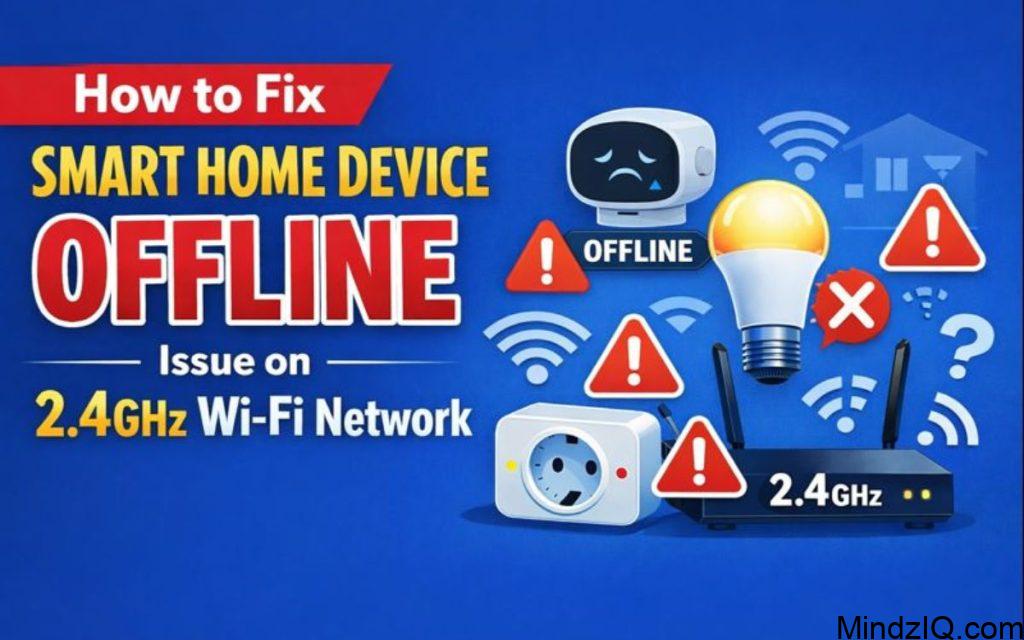
How to fix smart home device offline issue on 2.4GHz wi-fi network? Its not big problem. Device Offline issue (DOI)(also called Device Offline Incidents, or DOIs) can be a very irritating problem for smart home users where devices are unable to connect or suddenly disconnect. Most IoT gadgets live on 2.4GHz Wi-Fi Networks, which already have spotty coverage, so issue with connectivity are even more important to solve as the devices get farther from a signal source.
Issues with Wi-Fi when connecting smart devices typically has to do with interference among electronics, over-saturated Wi-Fi channels being used in an area. unauthorized usage (i.e. Trying to connect something only built for 5 GHz across the 2.4 GHz band), physical obstruction blocking signals (e.g. walls or distance ) impacting signal strength or increasing smart device error.
Why Are Smart Home Devices So Worried About 2.4GHz Wi-Fi?
Whatever smart home you build will be heavily depend on Wi-Fi bands. Home designs vary widely but IOT device favour 2.4 GHz since the lower frequency provides a more reliable signal in most scenarios, while the smart device in the household are all forced to 50GHz Bands.
5GHz Wi-Fi is Faster but has limited range and is best for home usage where cameras, plugs and sensors need to cut across walls and barriers in your home to work well. Moreover there are many energy savings plugs that need a stable 2.4 GHz network for effective energy saving.
If you have ever attempted to install smart bulbs, plugs or camera before the same warning has likely Popped up: please be sure your device is connected to 2.4 GHz Wi-Fi network. This is however puzzling when you are consider routers can deliver faster 5 or even 6 GHz connection so why are smart home contraptions restricted to the lower 2.4 GHz frequency? Well there actually are pragmatic, reliable, affordable not restrictive and available forces in play here.
At the top of the list is there 2.4 GHz wireless goes further. Higher frequency signal’s also do not carry as well they are less likely to make it through walls, floors and furniture’s. So that smart home device tend to squeeze into harder to reach for spots- garages, basement, patios, behind appliances. you want be breaking and land speed records but sensors like door sensor need is solid connection where ever they hang ergo your oven Rocker panel and that added range provided by 2.4GHz is the god send to at whether you are testing in the real world or lab.
Main Causes of Offline Issues with Smart Home Devices.
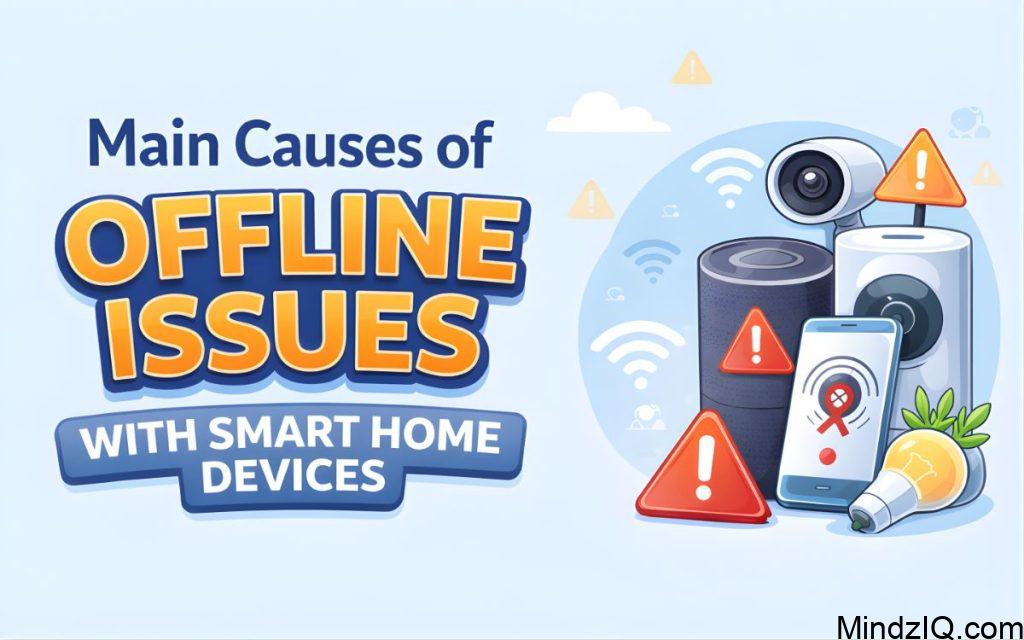
These are the important factors regarding in the failure of online Smart home Devices
There is nothing more discouraging than opening your smart Home app and seeing device offline. your light is on unresponsive, your camera feed takes a while to reload or your speaker wont play Back properly. All annoying at first glance, but these problems often have straightforward solutions if we understand how that happens, we can save your plenty of time, stress and Replacement Cost in a future cases.
Smart appliance should always suspect Wi-fi problems first because interpretation in network service, even very brief, can bring device to a standstill. The move might push devices further away from a router (or through thicker walls); doorbells, garbage sensors and garden lights may find themselves outside their coverage area when they should not.
Wi-Fi band confusion is another perpetual problem: some device only allow you to connect to a 2.4 GH network; Yet Newer routers often Merge both bands into a single SSID so if there is any error during set up or after reset. The smart device will simply appear on your old network . Without encryption settings would show as another network until reconfigured again.
Without undermining the caveats of firmware bugs ancient firmware could cause bugs. Security boundaries or incompatibilities with more modern routers and Apps the wrong series of updated cloud leave devices inoperative permanently. If you update and can’t finish the process the device becomes disconnected from the network to reboot and reconnect again later on.
Troubleshooting Steps to Bring Your Smart Device Back Online.
When a smart device drops offline. Finding out about the fundamentals power and internet seems obvious but obtained the problem. Ensure that device is being powered on. Check the outlet if it is plugged in. If it runs on batteries, replace or recharge them even in the absence of all low battery warning in the app. Second obviously check a have a internet by opening a web page or playing any video via your phone. your smart device is useless if your Wi-fi is down.
Check the power and internet status and then quickly reboot them. Simply unplug the smart device with 10 to 30 second then plug it back in. This will clear temporary bugs and it force in the device to reconnect. And while you are at it, restart your router as well. Routers can quietly go wrong for a time and a restart will solve more problems than you think.
Then check the strength of your Wi-Fi signal. While a smart device far from the router or even behind the thick walls may have some difficulty maintaining connection. Temporarily move the device closer to the router and then check it come back online again. In such a case low signal strength is the most likely case of the issue and you will need a Wi-Fi extender or mesh system for a permanent remedy.
Launch the app on the device and do a refresh or resync. Occasionally if the device is really online but the application has not refreshed its status. Force quit the app and reopen the app and check. If it does use that option when you know it needs to sync mind manually or reconnected.
If the device is still unable to connect verify the network changes. Did you just update your Wi-Fi name or password? Smart devices will be disconnected even for a slight changes. In that case you will have to reenter setup mode as a resettled device needs to be configurated to the new network. Check that gadget is on the appropriate Wi-Fi band. Numerous gadget required 2.4 GHz and wont work on 5GHz.
Why you smart home devices went offline: The Key Reasons ?
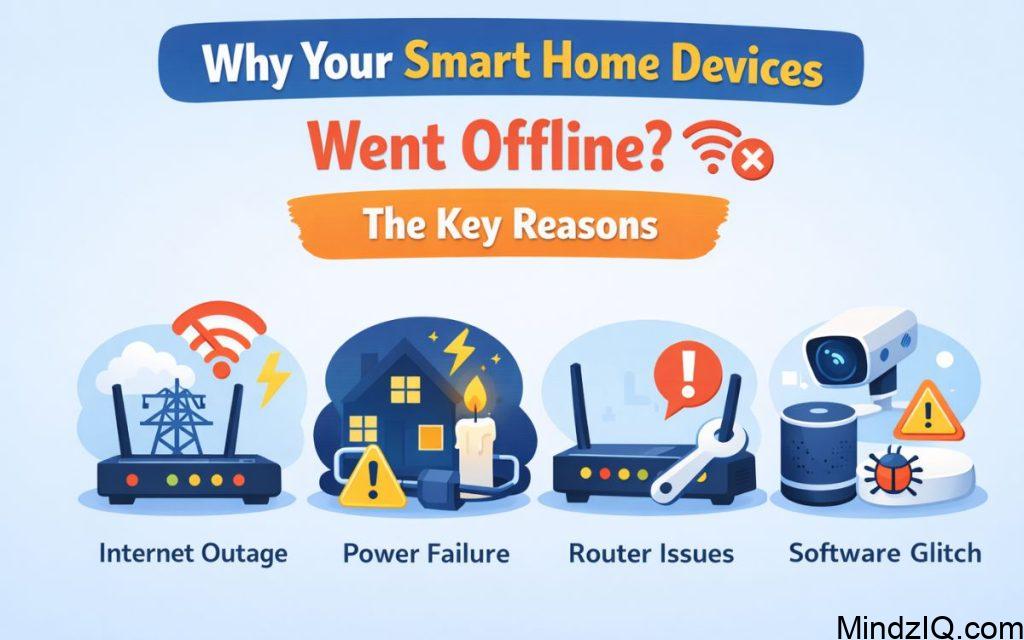
Smart home devices are for convenience. They help to solve problems, but when something happens at home that seems to be both incomprehensible and bothering. It takes one or two moments but all memory is rubbed away. For many users out right there now it may feel as if just a moment ago everything was okay. Also today’s most common problems are not due to the device itself but due to something in its environment causing it to malfunction. The device simply ran out of things it could handle.
Probably the biggest offender is problems with Wi-Fi connectivity. In modern homes smart devices depend on a good Internet link to function. If the router is restarted, then all data transmission is disrupted and devices in your house could simply stop working automatically.
Moving the router can the reset devices. New walls or furniture may reduce signal strength in a home setup. This changes the reception patterns. When compared to old type constructions where no thought was given about how signals might be disrupted. In extreme cases we have seen complete failure.
Another big cause is network configuration changes. The moment you change your Wi-Fi name (SSID) or password or security settings all of your smart devices break. Since most devices do not automatically reconfigure themselves, you have to manually set them up and reassociate them to the modified network.
Power failures can also take devices offline. Smart plugs, bulbs or hubs will be reset, or go into “error” mode by even a short power outage or electrical surge. When power is restored some devices have trouble in reconnecting on their own, particularly the router takes time in this case to go back online.
Firmware and faulty software are also problems. Old firmware, Failed updates, compatibility problems with companion apps can prevent devices from connecting. Manufacturers regularly updates issues to improve their products and fix bugs. But occasionally one of these updates will itself carry a new bug. Finally, overloaded networks lead to instability. Too many devices contend for bandwidth on some older routers might give rise to occasional dropouts.
Usually the solution is no farther than checking your network status, restarting wi-fi or rebooting your router. With this basic knowledge of the common pitfalls of troubleshooting, getting back everything online is simplified greatly and it is not hard to reduce the sense of burden.
Read More: Smart Home Integration with Alexa vs Google Assistant vs Apple HomeKit.