Introduction:
Now the modern smart homes are not limited to single system but today many houseowners uses multiple devices powered by Apple HomeKit, Amazon Alexa and google assistant. Due to advantage of wide device support one family member can prefer Alexa, One can prefer Google Assistant due its intelligence and android integration, due to seamless ISO experience one can prefer Home kit powered by Apple.
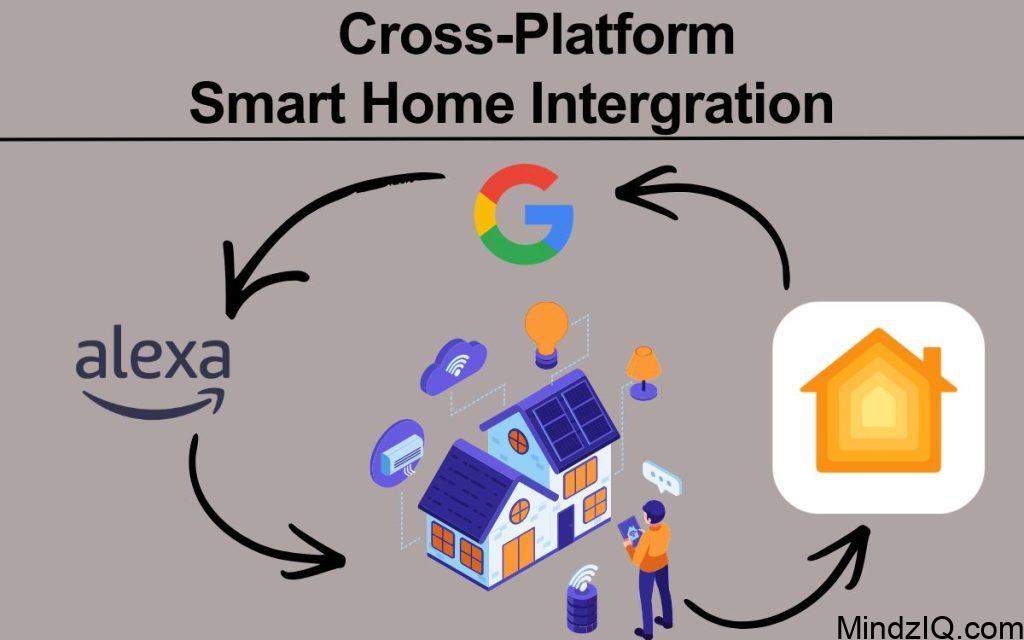
This variety of choices have increased demand of integrating cross platforms in smart homes. Smart Home Integration with Alexa vs Google assistant vs Apple HomeKit means trying to smoothly working of devices across the different platforms. But this is not that much easy as each device has separately designed with separate thinking, system, own standards and protocols. They use different thinking for smart working.
MORE ABOUT THREE DIFFERENT ECOSYSTEM:
Before knowing more about these 3 ecosystem we should know more about how actually they works and what makes them unique.
A. AMAZON ALEXA:
Due to its unique nature of supporting thousands of third party devices like sensors, lights, locks, plugs and other appliances Alexa is become widely adopted smart home platform.
Strengths:
i. Wide device compatibility
ii. Affordable Devices
iii. Commanding Voice and powerful routine
iv. Large Ecosystem
Limitations:
i. Reliability on cloud service
ii. Native support for Apple Home kit is limited
iii. Privacy concern
Due to flexible nature of Alexa it is widely used and liked in mix-device platforms as central control platform.
B. GOOGLE ASSISTANT:
The main work of google assistant is focusing on intelligence and contextual understanding. It is tightly integrated with the google services like search, map, nest devices and calendar.
Strengths:
i. Processing of natural language
ii. Strong AI
iii. Integration of deep android system and google ecosystem
iv. Reliable automation
Limitations:
i. Indirect home kit support
ii. Limited automation depth compared to Alexa
iii. minimum option for local control
The popularity of Google Assistant found in Android centric homes.
C. APPLE HOME KIT:
Prioritizing Local control, security, privacy are the different approach of the apple Home Kit. It is system that allows together working of smart devices with the help of siri voice command of Apple home apps.
Strengths
i. Best protection of Privacy
ii. Local automation
iii. Minimum cloud dependency
iv. Seamless integration of Apple devices
v. Secure certification of home kit
Limitations:
i. Only focus on Apple
ii. Hardware requirements are strict
iii. Expensive hardware
iv. Less compatible compared to google assistant and Alexa
It is ideal for the users who values smother integration, privacy, security in Apple devices.
Why Integration of Alexa, Google assistant and Apple home Kit is required ?
Smart Home Integration with Alexa vs Google assistant vs Apple HomeKit- Most smart homes uses multiple ecosystems due to below mentioned reasons:
1. Different types of smart phones in one family.
2. If devices support only one platform.
3. Certain system is better for certain task.
Benefits of Integration:
1. Multiple voice assistant can handled by one device.
2. centralized automation.
3. No need to replace existing hardware’s.
4. Flexible smart home with advantage of future-proof.
Challenges found in integration of cross-Platforms:
Smart Home Integration with Alexa vs Google assistant vs Apple HomeKit have many advantages but we can’t ignore its disadvantages also
a) Platform dependency:
When user or company becomes dependent on specific platforms it is hard to replace that platform with another making it costly, difficult or risky to switch with other. Means once your are committed to one platform you remains stuck with it.
b) Connectivity Differences:
Different wireless protocols such as Wi-Fi, Bluetooth, Thread, Z-wave, Zigbee are mostly used through which smart devices can communicate. Each device has its own specific protocol and can be used for specific task it is designed in the same order to provide estimated service.
The main disadvantage is not all devices can connect with all ecosystem or will not follow protocol equally. ex. If any device connect easily with wi-fi and provide better service may be not same for Zigbee. Some features will not work for all ecosystem hence differences in connectivity can be hard to work all platforms same for smart home ecosystem.
c) Local vs Cloud control:
Smart home devices like google assistant and Amazon Alexa which relays of Cloud control means before any action commands are sent to remote servers. whereas Apple home kit is based on local control where actions are directly connected with home network.
The hard job is when we want to work this two approaches together. If there is internet slow or unavailable, Cloud based system may delay in action while instant response is given by the system which relays on local control. when there is network disruption and we want synchronization of these two systems it may create problems like slow response, risk of reliability, inconsistence behavior.
d) Command conflicts:
If same device is connected to multiple platforms, it may get confused. It can trigger multiple rules by single action. for ex. When we light the bulb one system tell to turn off while other may tell to turn on. So, if so many automations are running together in smart home which creates problems and user may get frustrated. It will look like smart home is arguing with himself.
Common integration approaches:
Below are the most common ways to connect Smart Home Integration with Alexa vs Google assistant vs Apple HomeKit:
1.Point to point integration:
This is the easy approach where one system can direct connect to other through the custom interference. But problem arises during managing as connections grows because each system requires its own connection
2.Middleware:
It is the best as it handles communication from all platforms. all messages get translated and routed through the central hub. It is very helpful for adding new system.
3. Data level Integration:
Rather than connecting directly with the system it share the same data through data store.
Right system should be chosen with keeping in mind points like how many systems do you have, how easy to maintain, how fast do you want data transfer.
Automation and routine across platforms:
Using Smart Home Integration with Alexa vs Google assistant vs Apple HomeKit multiple platforms for managing smart home make be complicated but there are some ways to make it smooth working
1.Use One Hub for Automations:
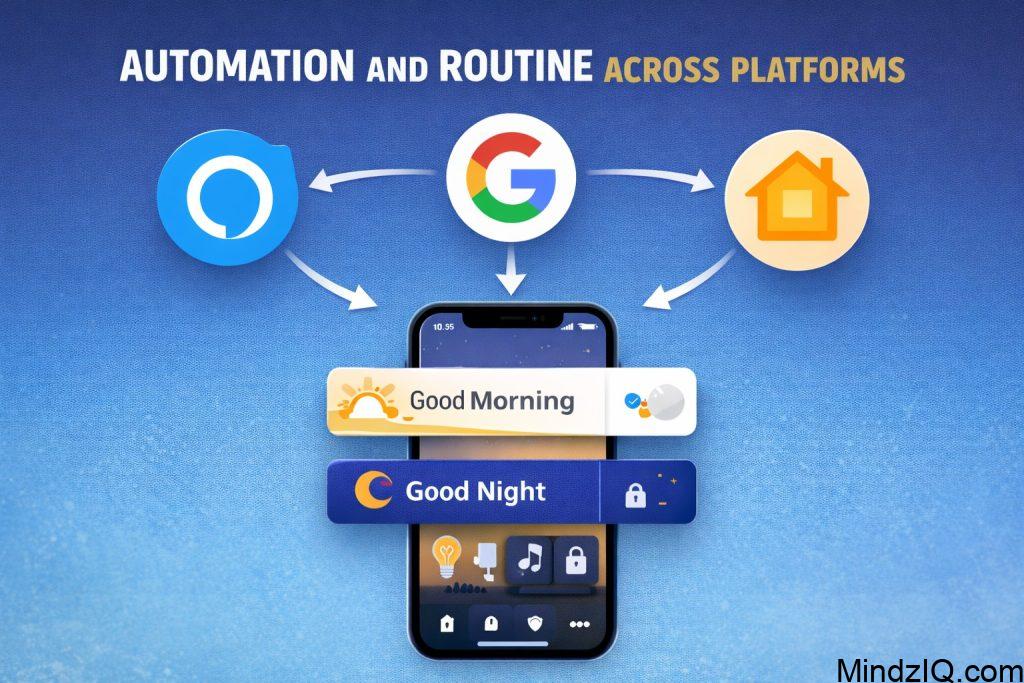
All automation logic should be used in one hub instead to making different rules for all platforms. This will avoid twice working and confusion of devices in automation. Voice assistant like Alexa, Google home kit, Siri work on voice command and not on repeating automations
2.Scene synchronization:
Create the scenes like good night or good morning once and let run it through any assistant. It can adjust light, play music even if we are using different platforms.
3. Consistency in voice command:
It is very important to use clear and same name of device across platforms which will help all assistant to understand the commands. Don’t use platform specific commands, if use same command it will be useful for Alexa, Siri, Google Home Kit.
Best Practice for successful Integration:
Before using the system of before integrating it everyone should be clear in my mind that why he want integration of system , what he want to connect this will help smooth running of the system. Data should used with consistency with all platforms and security and privacy should be kept. Test integration should be carried out before final go to live.
Try to use centralized automation and avoid duplication of workflows.
With the documenting setup plan for regular maintenance. By following all these steps system will work smoothly, reliably and will help to manage different platforms together.
The future of cross-Platforms smart homes: The future of smart home is bright with using cross-platforms. No matter what you use either Alexa, Google Assistant, Siri, Apple home kit in future all this devices will work together perfectly. Cross-platform control will become more easy hence no need of multiple apps.
Even if automatic update happens data will remain secured. Overall smart homes will become more reliable, convenient, customized with security and privacy across all the platforms.
Hence, Smart Home Integration with Alexa vs Google assistant vs Apple HomeKit should be studied before using cross platforms
Read More: Event-Driven Home Automation Architecture: The Smart and Complete Guide.