
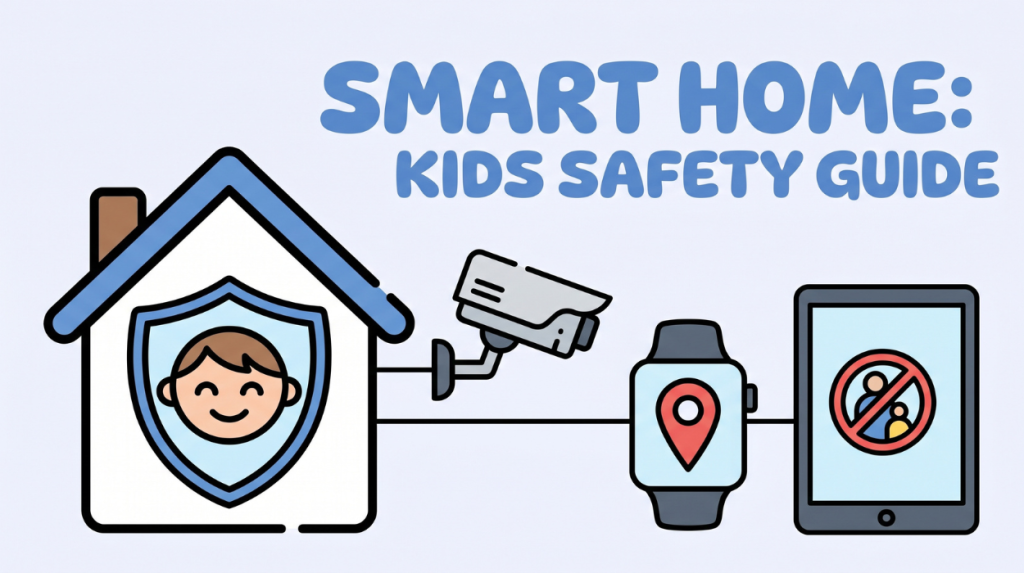
Introduction:
Smart devices don’t just monitor they predict alert and prevent risk in real time creating proactive safety ecosystem inside your home.
Everything you need to know about Smart home devices for kids safety including types and best practices.
Why child safety at home matter more than ever?
Many child injuries like false burns and poisoning happen at home. These incidence are often preventable with proper monetary and awareness. Children are naturally curious. They explore touch and experimental open without understanding danger. This makes constant supervision essential.
Child safety at home matters more than ever because modern life styles have reduced constant supervision while risk inside the home remain high. Children are naturally curious and often unaware of dangerous like sharp object electrical appliances stairs or higher hazards making accidents more likely even in familiar environment. And the same time many parents are busy with work or managing multiple responsibilities which limits there ability to monitor kids continuously. With increasing use of Technology and devices like online exposure and digital misuse have also emerged. Therefore ensuring a safe home environment both physically and digitally has become essential to protect children from preventable injuries and give parents peace of mind.
However modern parents face challenges like:
- Working long hours
- Managing multiple responsibilities
- Limited extended family support
Smart home devices Bridge this gap by acting as a digital Guardians.
What are smart home devices for kids safety?
Smart home devices are internet connected tools designed to:
- Monitor activities
- Detect a unusual behaviour
- send instant alerts
- Automatic safety actions
These devices are part of internet of things ecosystem where gadgets communicate with each other to create a connected home.
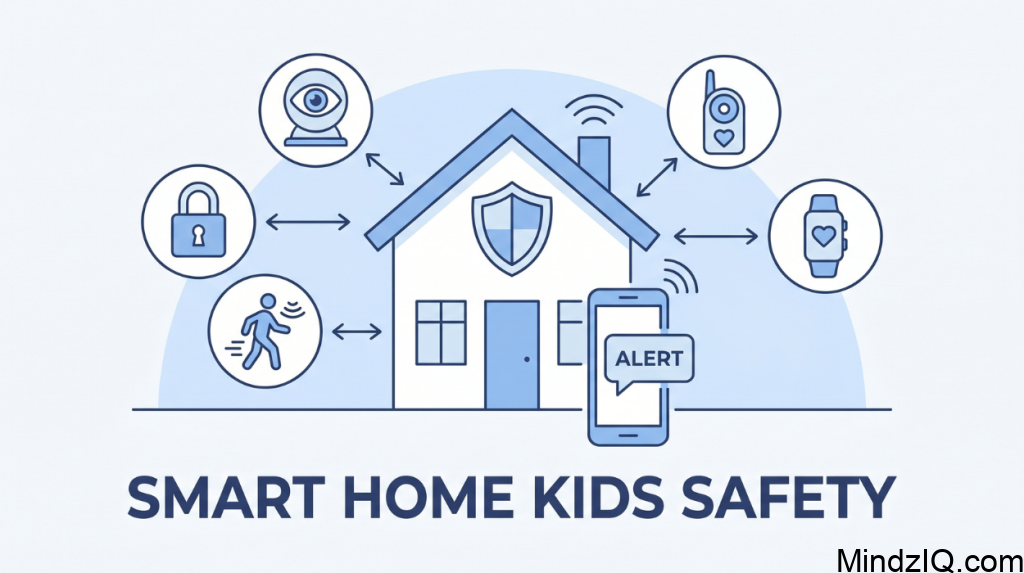
Examples include:
- Smart cameras
- Motion sensors
- Smart Lock
- Baby monitors
- wearable trackers
Key categories of Smart safety devices for kids
Smart cameras and baby monitors
These are most popular devices for child safety.
Features:
- Live video streaming
- Night vision
- Motion detection
- Cried detection
- Two way audio
Benefits:
- Monitor in funds and toddlers
- Check on kids remotely
- Receive alerts if unusual movement of curse
- Modern camera can even detect dangerous situation like a child climbing furniture.
Smart door locks and video doorbells
Security starts at the entrance
Features:
- Remote locking or unlocking
- Visitor video recording
- Facial recognisation
- Mobile alerts
Benefits:
- Prevent stranger from entering
- Monitor who visits your home
- Ensure kids don’t open door unknowingly
Motion sensor and smart alarms
This devices that moment inside your home
Features:
- Detect unusual motion
- Send instant alerts
- Trigger alarms
Benefits:
- Know if your child enter restricted areas
- Prevent accidents like stairfalls
GPS trackers and smart wearables
These are wearable devices for children
Features:
- Real time Location tracking
- SOS emergency button
- Geo fencing alerts
Benefits:
- Track kids outdoor
- Receive alerts if they leave same zones
- Wearables are specially useful for school going children
Smart smoke detectors and gas sensors
These devices prevent life threatening hazards
Features:
- Detect smoke fire or gas leak
- Send others to smart phones
- Trigger alarms
Benefits:
Early warning during emergencies
Faster response time
Smart plugs and appliance controllers
Children often act with electrical devices
Features:
- Remote control of appliances
- Automatic shut off
- Energy monitoring
Benefits:
- Prevent electrical accidents
- Control dangerous devices like heater
Smart lighting system
Lighting place crucial role in safety
Features:
- Motion activated lights
- Remote control
- Scheduled lighting
Benefits:
- Prevent night time accidents
- Ensure visibility in dark areas
How smart home devices improve child safety
Smartphone devices improve child safety by providing real time monitoring instant alerts and automated protection within the home environment. Devices like smart cameras motion sensors and door locks a low parents to keep track of their children activities even when they are not physically present insuring quick action if something unusual happens. Features like gas sensors, smoke detector, and smart plugs helps in preventing accidents by detecting hazards early and automatically controlling appliances. Additionally wearable devices and GPS trackers keeps children safe outside by sharing their live location. Overall these technology is create a proactive safety system that not only response to dangerous but also help prevent them before they offer.
Smart home Technology significantly enhance safety in multiple ways.
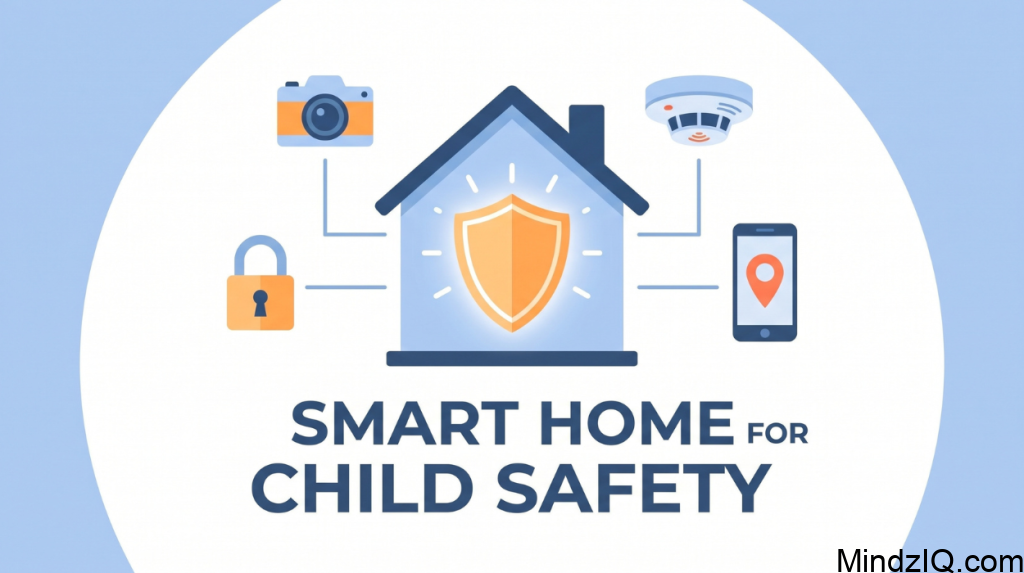
Real time monitoring
Parents can monitor their children 24/7 through mobile apps.
Instant alerts
Devices send alerts for:
- Unusual movement
- Entry / exit activity
- Environmental hazards
Preventive safety
Advanced system can predict risk before accidents happen
Remote control
Parents can:
- Lock door
- Turn off appliances
- Activate alarm
Peace of mind
Smart devices reduce anxiety by constant awareness
Psychological and development impact on children
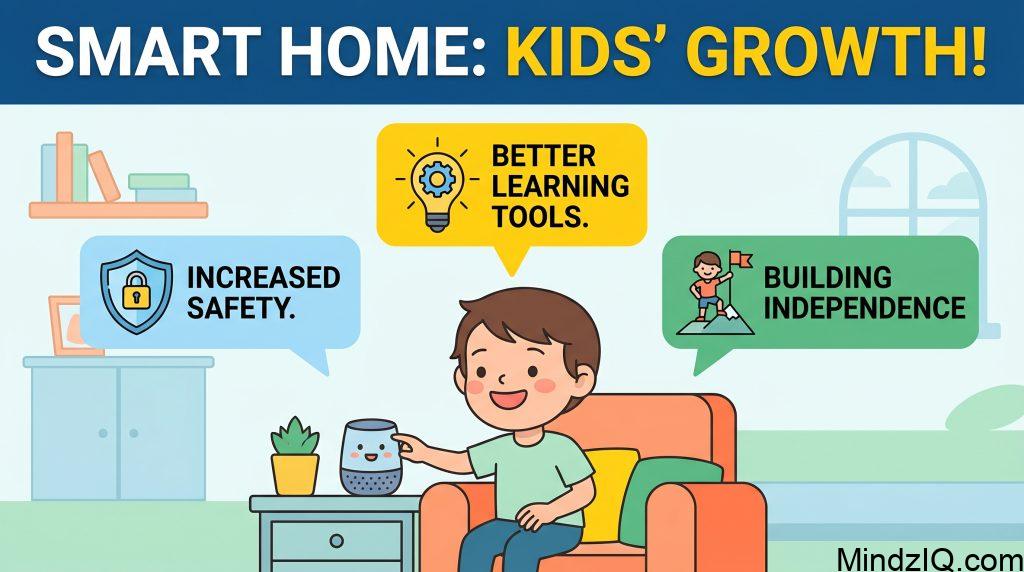
Smart home devices can have both positive and negative psychological and development impacts on children. On the positive side they create sense of security help build safety awareness and all children to gain Independence while being monitored.
While smart devices improve safety they also affect children’s development
Positive effects:
- Improved safety awareness
- Better learning through smart tools
- Increased independence
Negative effect:
- Over Reliance on technology
- Reduced physical activity
- Attention issues
Children today spend up to 8.5 hours daily on screens which can impact health and slip pattern.
Parents must maintain balance between safety and over exposure.
Risk and challenges of Smart home devices
Smart home devices are not perfect. They come with certain risks.
Privacy concerns
- Smart devices collect large amount of data
- Video recording
- Voice commands
- Behavioral pattern
These regious concerns about data miss use and surveillance
Security threats
- Iot devices can be hacked.
- Unauthorised access to cameras
- Data leaks
- System control by attackers
- Research highlights risk like unauthorised access and privacy breaches.
Misuse by children
Children May:
- Change device setting
- Access inappropriate content
- Accidentally control Home systems
Over dependence
Children too much on technology instead of learning Real world skills
Best practices for using smart devices safety
To maximize benefits and risk follow these best practices
Secure your devices
- Used strong passwords
- Enable two factor authentication
- Update firmware regularly
Used parental controls
- Restric access to certain features
- Monitor uses
Limit screen time
- Follow recommended guidelines
- Encourage outdoor activities
Choose trusted brands
- Avoid unknown or cheap devices
- Check security certificate
Educate your children
- Teach them about safety
- Explain them device usage rules
Future of smart home safety for kids
The future of Smart home technology is exciting.
Trends to watch:
- AI based predictive safety
- Voice controlled automation
- Integrated smart ecosystems
- Advanced facial recognition
- Child specific AI assistants
Smart homes are you allving from reactive systems to proactive safety environments.
Read More: Smart Home Automation For Pet Owners.
Real life use cases
Case 1: working parents
Parents can monitor children remotely during office hours
Case 2: Toddlers at home
Smart sensors prevent access to dangerous areas
Case 3: school kids
GPS wearables ensure safe travel
Case 4: emergency situations
Smoke detectors provide early alerts.
Cost versus value
Are smart devices worth it?
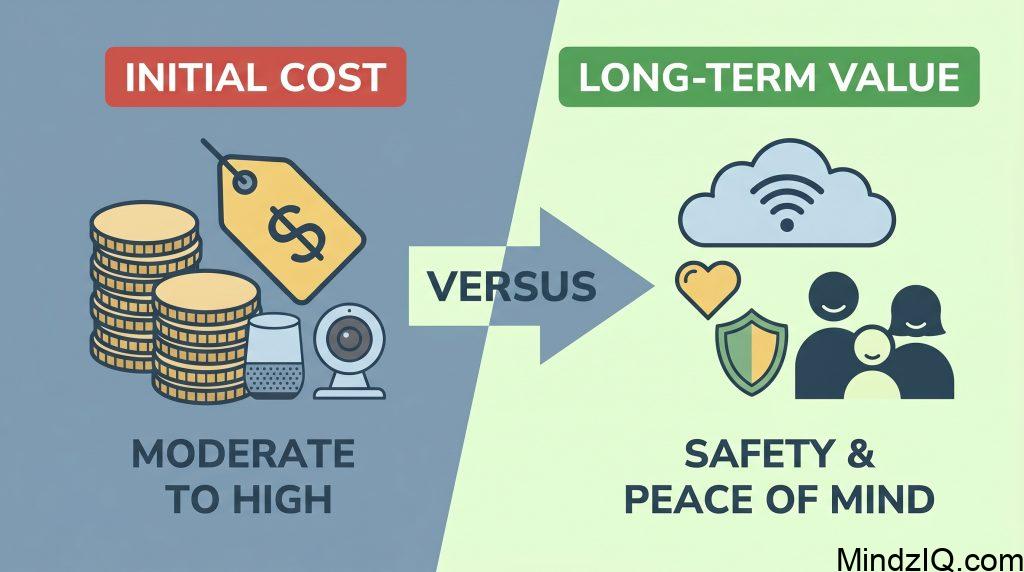
Initial investment:
Moderate to high
Long term benefits:
- Reduced risk
- Increase the safety
- Peace of mind
The long term benefits of using Smart home devices for child safety include creating a more secure responsive and stress free environment for both children and parents. These divises provide continuous monitoring instant alerts and automated protection which significantly reduce the risk of accident and emergencies overtime. For parents that offer peace of mind and flexibility especially in busy life style while Potentially lowering future cost related to injuries or damages. In the long run smart devices not only enhance physical safety but also support more structured confident and Technology aware of upbringing for children.
Most parents consider smart devices valuable investment in their child safety.
Conclusion:
They provide real time monitoring instant alerts and proactive protection making home safer than ever before.
However these devices must be used wisely. Parents should balance safety with privacy Technology with real world learning and convenience with responsibility.
In the end Smart home devices are not just gadgets they are modern parenting tools designed to protect what matters most to your child.