
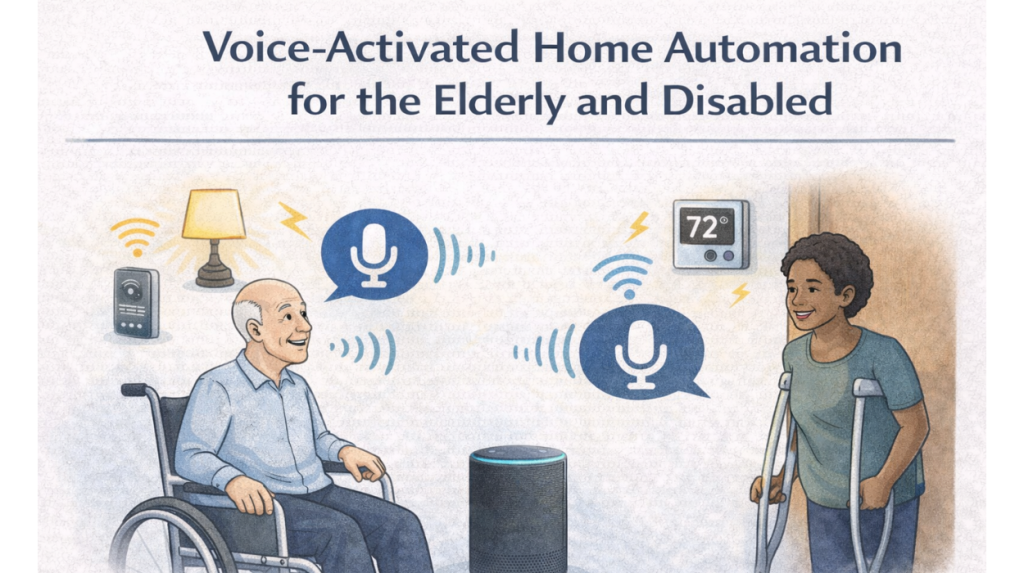
Introduction:
In a world that moves fast these days, technology has made life easier and safer. Voice-activated home automation systems are one of the greatest support instruments for elderly and handicapped people.
It allows users the power over many devices which are both inside and outside their home. In many ways that makes it very accessible for people with limited mobility, physical disability or even extremes of cognitive impairment.
More about Home Automation and Its Technologies
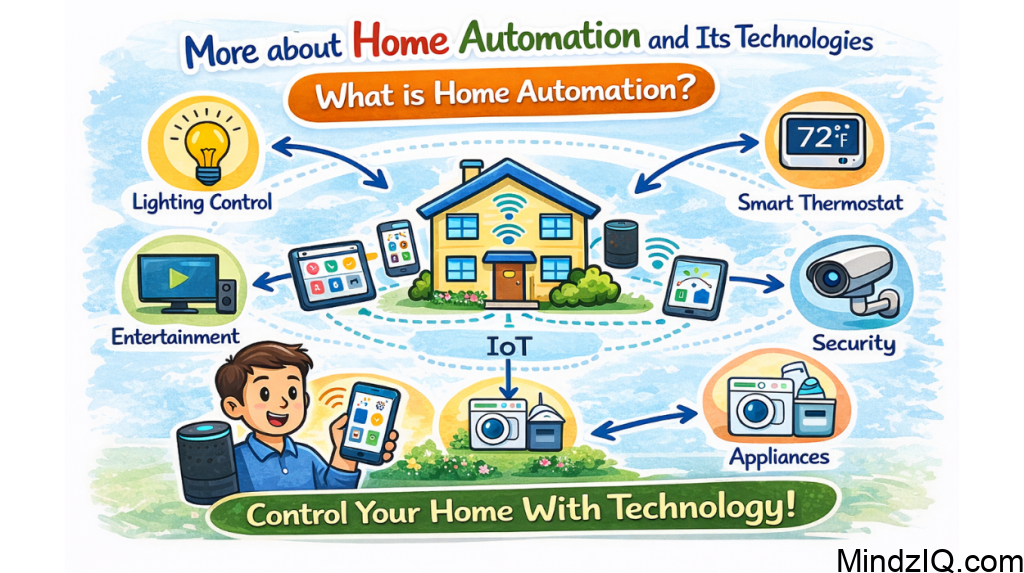
What is Home Automation?
It is system that involves technology which remotely control home systems and appliances. That could include dimming lights, changing how the temperature in the room is controlled, operating entertainment systems or security cameras via a smartphone, tablet or voice commands. All of this is achievable through the Internet of Things (IoT), which pairs devices to a central hub or network and oversees it like clockwork.
Voice-Activated Technology
With the help of this technology users can control devices with voice instructions. Smart speakers and voice assistants like Apple Siri, Amazon Alexa, Google Assistant have made easy for users to interact with their homes using voice commands. This system uses natural language processing (NLP) to identify and interpret the spoken word and can be used by users who have limited technical knowledge to operate them easily.
Key Voice-Activated Systems
- Amazon Alexa: It is and voice assistant that can control security cameras, lights, entertainment systems, thermostats and more.
- Google Assistant: it is known for its powerful search capabilities, Google Assistant can manage range of smart home devices.
- Apple Siri: With Apple’s device integration, you can run your home automation System on its HomeKit platform
Advantages to Disabled and Senior Citizens
The intelligent home Voice control commands can offer many advantages for elderly and handicapped users. Beyond convenience, these amenities provide for greater freedom, safety and quality of life.
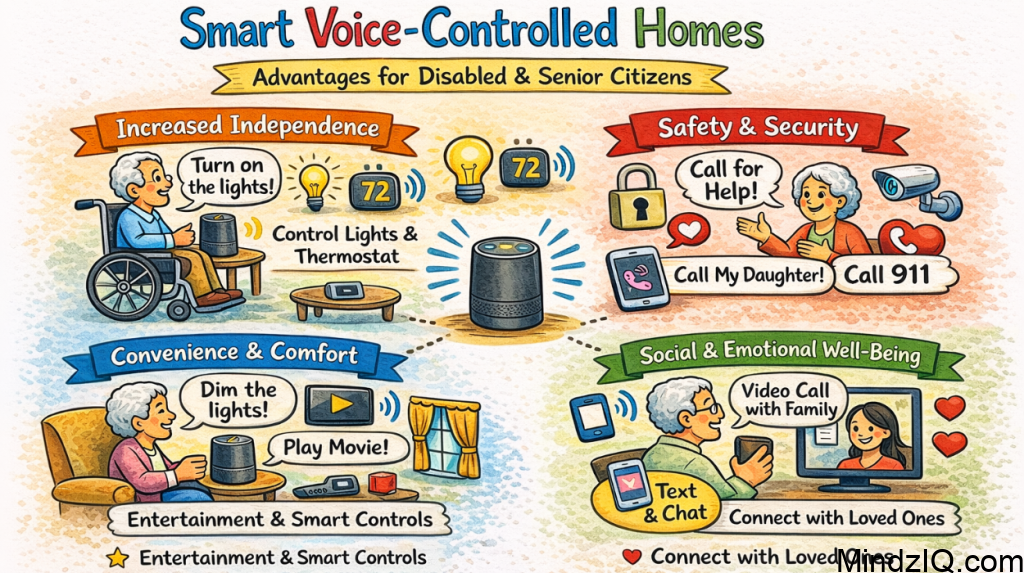
1.Increased Independence
The ability to live more independently is one of the main advantages of voice-activated home automation. Older adults or people with disabilities may have physical restrictions that prevent them from doing what many people take for granted, such as turning their lights on and off, setting the thermostat at a certain time of day or using their TV. With voice activated commands these operations are no longer a hassle to accomplish without the help of another person.
For example, “Turn on the lights in the living room” or “Set the thermostat to 72 degrees,” allows them to control their surroundings without having to move or be dependent on a caregiver.
2. Safety and Security
Especially if they are living alone, the security of seniors and the disabled is a paramount issue. Voice-assisted systems may be used to enhance safety, where the user can control crucial systems such as locks on doors, security cameras and alarms by means of voice input.
In case of an emergency, the user can make a cry for help without needing to reach another place or a phone. While we focus on how voice assistants can call emergency helpline or contact family members with commands such as, “Call my daughter” or “Dial ***”
In addition, fall detector alarms and call for help with using the voice also can be integrated into smart homes offering a system of always being able to get help at the sound command of your own voice.
3.Convenience and Comfort
Systems that respond to voice can help anyone with mobility challenges. Whether to dim the lights or promote a restful night’s sleep, voice-activated systems make it easy for people to control their homes without having to lift much more than a finger.
From smart curtains to living room entertainment, everything can be handled by the user in their chair or bed. For example, voice assistants work with lighting to dim the lights for a movie or they can turn off the TV when it’s time to go to bed.
4.Social and Emotional Well being
Voice-activated tech can offer companionship and combat the isolation many seniors who are living on their own experience. Users can also continue to connect with family and friends by simply using voice commands, including placing phone calls, sending text messages or making video calls on devices like the Amazon Echo Show or Google Nest Hub.
The means of communication, look into social media/entertainment is fuel for brain and helps in making us feel good about ourselves that enhances the emotional well being as well overall mental health.
Practical Applications of Voice-Activated Home Automation
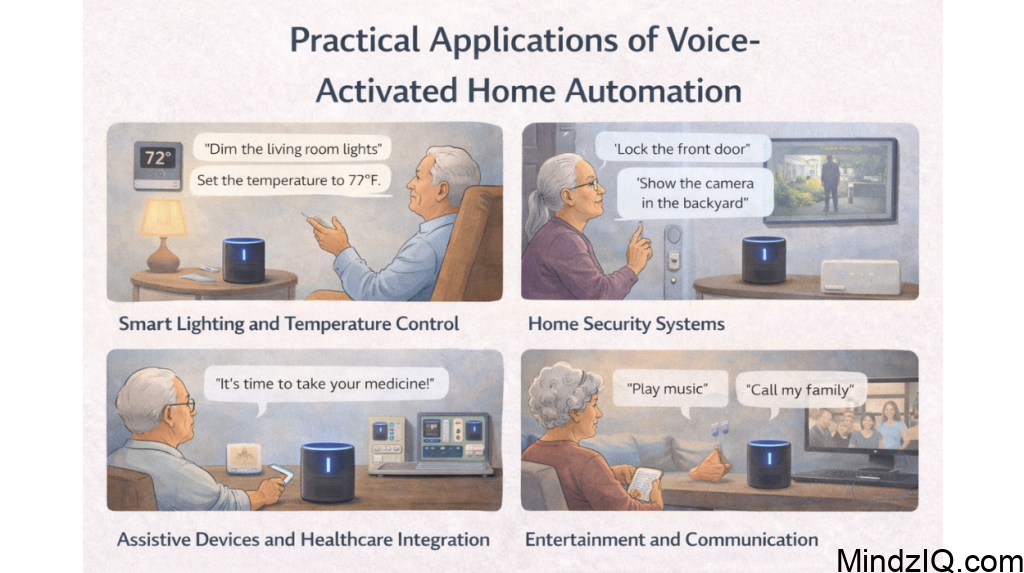
It refers to using voice home technology in different avenues of life and not least the everyday lives of elderly disabled persons who may find it easier to run their homes effectively with a little help from home tech.
1.Smart Lighting and Temperature Control
For someone with poor physical mobility, it’s not always easy to reach the light or adjust the temperature. With voice control, you can just tell your lights what to do with a voice command. As an example, “Dim the living room lights” or “Set the temperature to 72°F.”
This is a convenience, so people can still be comfortable at night or on days when they cannot reach the themostate, or chap on a light switch.
2. Home Security Systems
This can be a huge boost to the security of your home. And if they are either seniors or people with disabilities, the added effort to check on their doors or windows (or even arm a security system) feels that more overwhelming. And voice control can now lock doors, check security cameras or turn on alarms with a spoken command.
Users can say “Lock the front door” or “Show the camera in the backyard,” providing peace of mind as well as empowerment when it comes to their security.
3.Assistive Devices and Healthcare Integration
Health monitoring tools and medical devices could be integrated with voice-activated systems to help aging adults and disabled people manage their health. For example, the voice assistant can tell the user to take medicine or monitor bio signal and suggest exercising.
Healthcare smart devices like blood pressure or glucose meter can, also be linked with VAs so that one’s health status is checked and reminded as well for healthcare tasks such as drugs taking, drank water.
4.Entertainment and Communication
There are also voice assistants that are designed to be used hands free and can control music, TV and other media. Commands like “Play classical music” or “Turn on the news” can be uttered without a remote control.
Makes things so easy to be able stay connected over a call with your family or even in social media apps for the voice enabled applications like video calling as well.
Challenges of Voice-Activated Home Automation
While having multiple benefits, there are several challenges to consider.
1. Technical Challenges
2. Privacy and Security Concerns
3. Affordability and Accessibility
4. User Education and Adoption
The Future of Voice-Activated Home Automation for Elderly and Disabled Users
While voice technology will only get better, more creative solutions should be on the horizon for senior citizens and those users with a disability. “The improvement in AI and machine learning will make those tools smarter, more personalized to what you want or need.
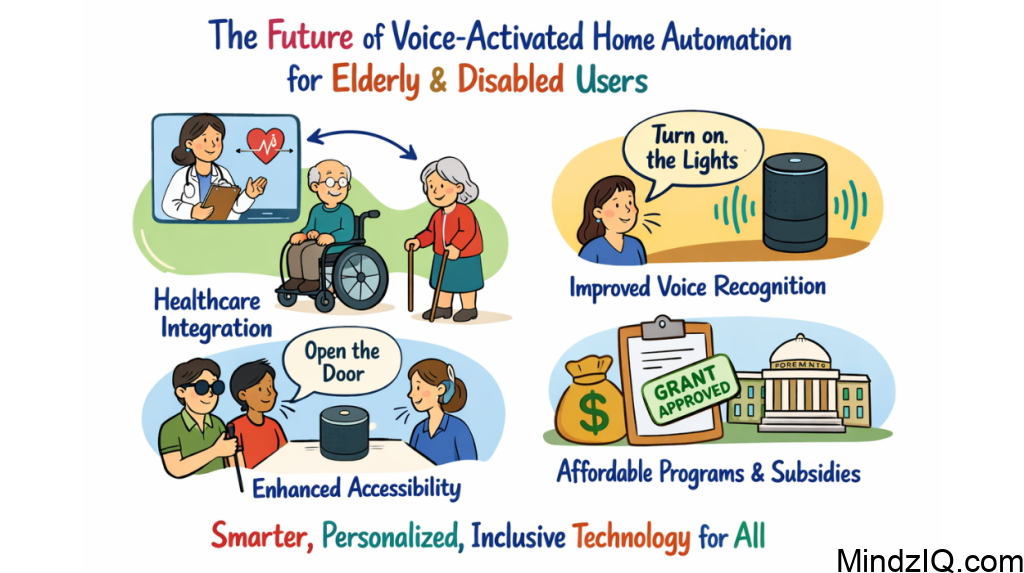
In the future, users can expect additional development such as more seamless healthcare system integration, improved vocal recognition, and enhanced accessibility to bring these technologies to a broader user base. And government and nonprofit subsidies or programs helps to bring these technologies within financial reach for the people who need them most.
Read More: Circadian Lighting Automation with Motion Sensor Lux Sensor Setup.
Conclusion
Voice-activated home automation it is not for only convenience. It is technology by which elderly and disabled individuals lives independently, safely, and comfortably. By voice control over various aspects of their homes, this technology improves overall quality of life. And as voice continues to evolve, as we’re able to tap even more into that power, it’s going to only be more hopeful for those communities that get to live in dignity and independence and a better quality of life.