
Introduction
Smart homes give us a sense of control and convenience as connected devices seamlessly integrate with our daily lives. But what if things go wrong?
Blackouts and internet outages are a reality of life, but they often go overlooked when you’re thinking about how to set up a smart home.
Here, we’re going to look at fail safe automations that can help guarantee your smart home still runs smoothly if the power cuts out or the internet is down and ensures your home will safe, efficient and comfortable.
1. Importance of Fail Safe Automations in Smart Homes
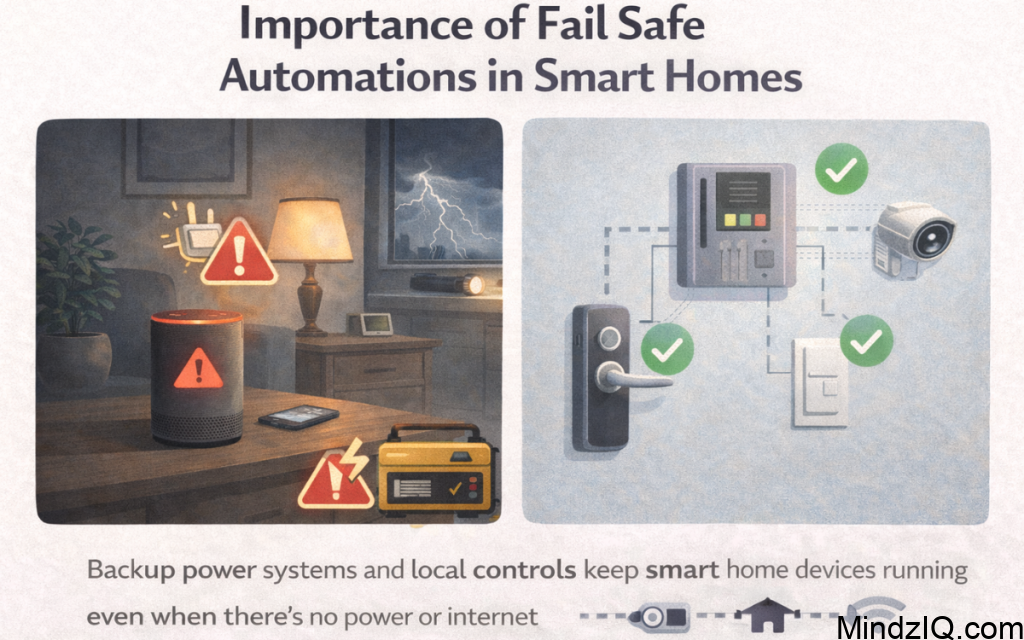
Automations are crucial to have something work correctly even when you have the occasional failure. Fail safe automation is the redundant automatic control system that will automatically take over, in event the main control system fails. That means having backup power systems and local controls that let your smart home devices keep functioning even when there’s no power or an internet connection.
Fail safe systems are essential if you expect to keep your home running smoothly, not to mention safely. Whether it’s making sure your alarm system stays up and running during a power outage or keeping your smart locks active when the internet crashes, these automations can help ensure that not only your home, but also your peace of mind is always in good shape.
2. What Happens During a Power Outage?
Power failures can be as short lived as quick flickers of the lights to sustained blackouts and your smart home can be impacted. Most smart devices, like thermostats, lights, refrigerators and home security cameras, need electricity flowing to them at all times. Once power is cut, these devices become inoperative, having no control over your home settings and security.
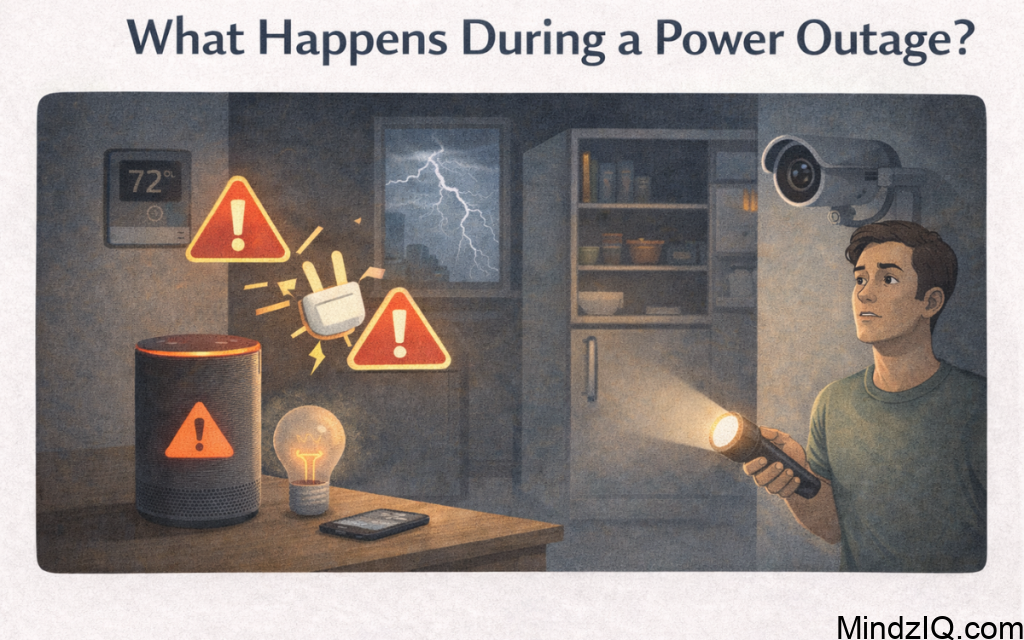
No backup systems mean smart home devices won’t be able to do their jobs, and you’ll have to rely on good old fashioned manual intervention when it comes to maintaining comfort and safety.
3.Common Problems During Power Outages in Smart Homes:
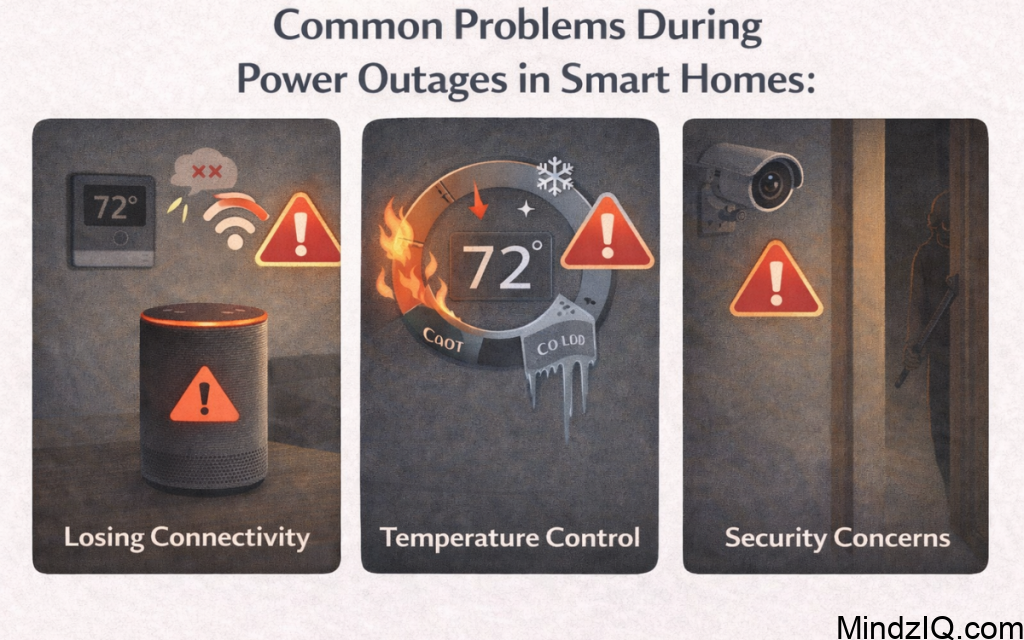
Losing Connectivity: Cloud based or centrally hubbed devices may cease to function once the servers, or hubs they depend upon lose power.
Temperature Control: If smart thermostats and HVAC systems go down, your home could become either too hot or too cold.
Security Concerns: Cameras, alarms and other security devices fails when power cut off hence increases risk of security threats.
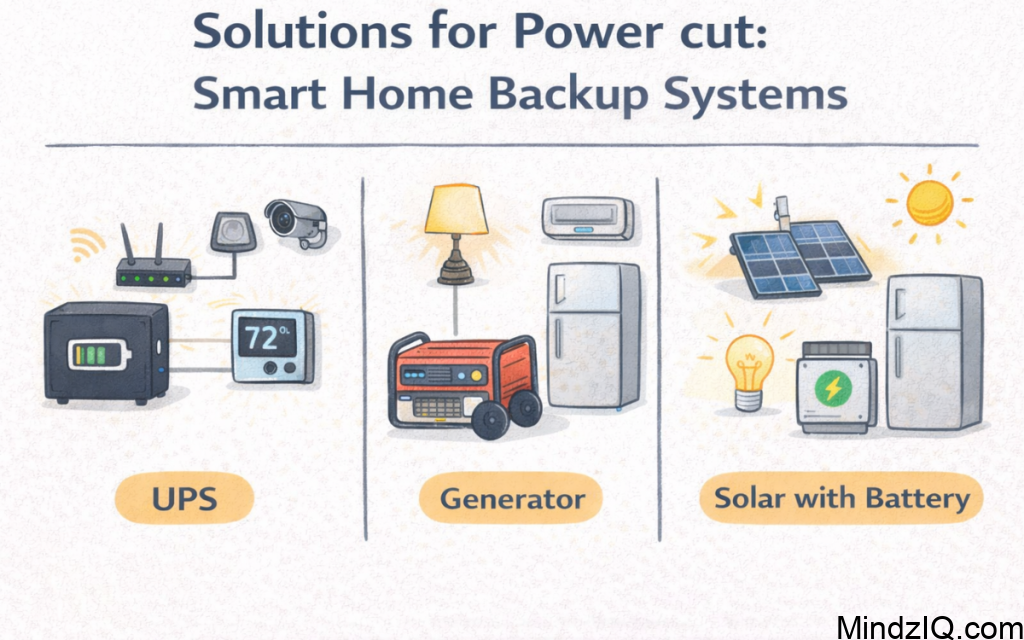
4. Solutions for Power cut: Smart Home Backup Systems
First line of defense for power outages in smart home is backup power supplies. These systems keep your computers running by providing battery backup during power cut off.
4.1. Uninterruptible Power Supply (UPS)
UPS is an unit which offer power backup during power cut off. It’s usually done by energizing a battery, which then will power necessary devices when the primary supply is taken down. A UPS isn’t going to power your entire home, but it can keep key devices running, including:
Wi-Fi Router: Making sure you don’t get disconnect while surfing.
Smart Thermostats: Prevents temperature changes.
Home Safety Devices: Cameras and alarms performance is well maintained
A UPS can keep your devices running from a few minutes to multiple hours, depending on its capacity and the devices you have plugged into it. Also, it activates itself when there is power cut off without manual action.
4.2. Backup Generators
Backup generator would be more appropriate For larger homes, or where power outages are common and last for days. These devices starts automatically when the primary power is lost, and provide electricity to the house for some time. Generators can provide electricity to the necessary gadgets as well as big infrastructures like:
HVAC systems: Ensures your heating ventilation and air conditioning units work.
Illumination: Guarantees your living area is well lit.
Refrigerators: Saves food during power outages wearing a cap or hat to protect you from harmful sun rays.
Emergency generator but they tend to be expensive and will often require professional installation, but if you would like the peace of mind that your home can run without disruption for an extended period during a power outage then adding an emergency generator is definitely something to consider.
4.3. Solar Powered Systems
Solar powered systems with battery backup can also be installed into your smart home, because the power will still stay on even during a black out. Solar power can aid in the charging of backup batteries, which can be turned around to keep critical devices powered on.
When combining with solar panels and energy storage (like Tesla Powerwall), you are able to build a home that does not need a grid connection but still receives power from renewable sources. Solar is most effective in sunny areas.
5. Fail Safe Automations During Internet Downtime
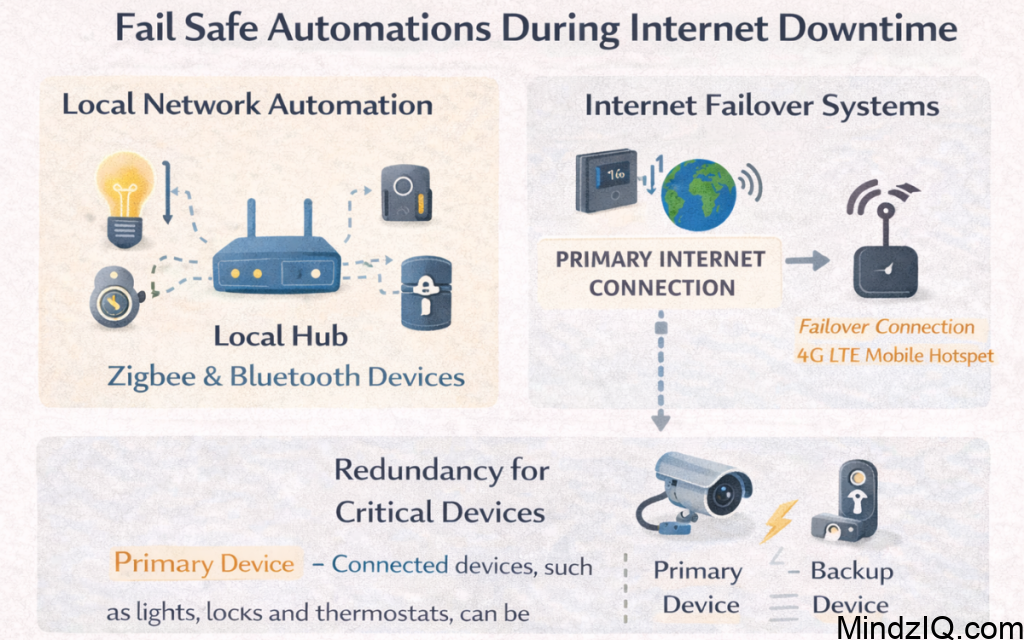
Besides for power outages, internet failure can also take down your smart home systems. There are a handful of automations and solutions you can deploy in order to prevent this from happening and to keep your smart home running smoothly.
5.1. Local Network Automation
For automations not reliant on the internet, you are able to create local automations using non cloud dependent devices. Even if the internet craps out, it will still work over your local network.
Examples:
Local hubs: You can shift them as long internet is down. Some home automation hubs that work locally like Home Assistant and Smart Things
Zigbee and Bluetooth: Connected devices, such as lights, locks and thermostats, can be controlled over Bluetooth or Zigbee without internet access.
5.2. Internet Failover Systems
An internet failover solution means the system in which if your normal internet fails, another one kicks in.This failover configuration is useful for businesses in particularly, but you can also modify it to work with a smart home, so that the internet is always on.
Example:
PRIMARY INTERNET CONNECTION This is your primary broadband connection.
Failover Connection An alternate mobile hotspot or 4G LTE connection that automatically switches on when the primary one is lost.
By setting something like this up, your smart home devices that rely on cloud services and remote control operation keep working when the internet is no longer available.
5.3. Redundancy for Critical Devices
Some smart home devices are more important than others security cameras, smart locks and motion sensors could all make or break your cozy abode. These devices should be able to work even if your internet is not working. An easy way around this is to incorporate redundancy into your system, which means if something does go wrong with a specific key device, you have another second method of getting the job done.
6. Tips for Designing a Robust Smart Home Automation
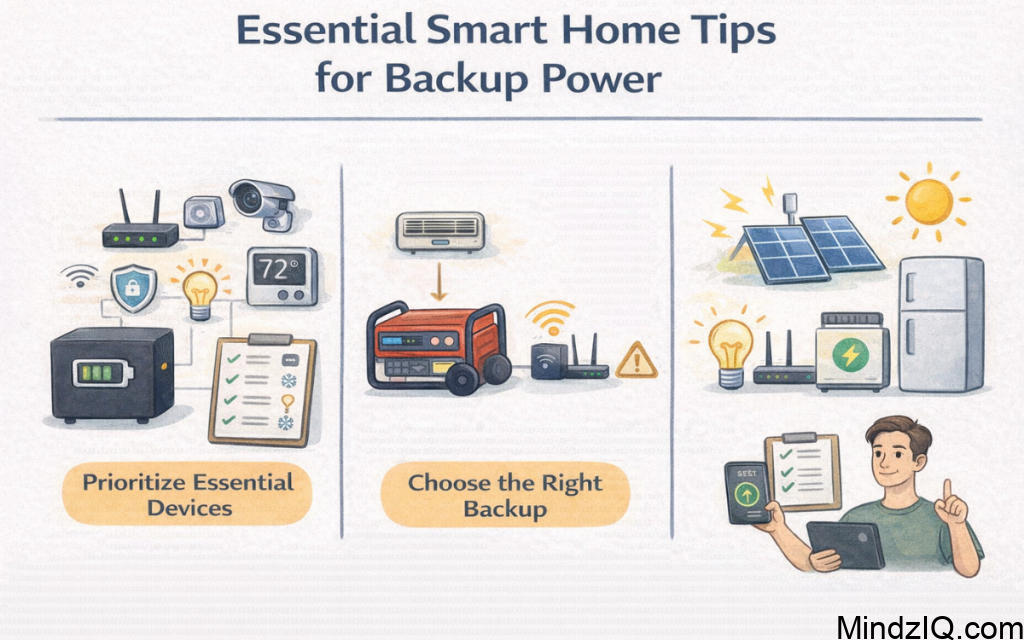
Now by knowing basic of fail safe automation here are a few practical tips you should know during the design of smart home for power losses and internet disruptions.
6.1. Prioritize Essential Devices
Not every device have need of backup system. Begin by determining which of your devices are critical, and which will be needing to retain power, or a wi-fi connection. These include:
- Security systems
- HVAC systems
- Smart lights
- Home entertainment systems
- Smart refrigerators
6.2. Choose the Right Backup Power Solution
Ensure your backup power (UPS, generator or solar based system) can support the size of your home and number of devices you would like to run. A good backup system should have been able to keep several basics running without blowing the circuits.
6.3. Invest in Internet Redundancy
If you rely on technology for smart home functions to work, try adding an internet backup option (failover module, mobile hotspot or two ISP providers). It will enable you to avoid having your devices rendered useless by an intermittent internet connection.
6.4. Test Fail Safe Systems Regularly
After you have activated them, you should also routinely test your fail safe systems to ensure they will work when your power fails or the internet is down. Then try black/startling the problem occasionally, if your back ups aren’t functioning proper.
Read More: AI-Based Smart Home Automation Solutions.
Conclusion:
The amount of convenience, security and energy savings home automation systems can bring is mind boggling. But the only way to enjoy those benefits is by preparing for inevitable breaks in supply of power or internet service. Fortify Your Smart Home With Failover Power, Internet and Local Automation EVEN if you’ve invested in backup power like battery backed outlets or internet failover solutions or want to keep local control, here’s what might occur.
At the end of the day, if you do take a leap into finding a fail safe way to go ahead and automate your home, your convenience isn’t the only thing being protected here it’s also those that you love. With a little planning and the right technology, you can help future proof your home for unforeseen failures and continue to enjoy smart living without interruption.