
Introduction
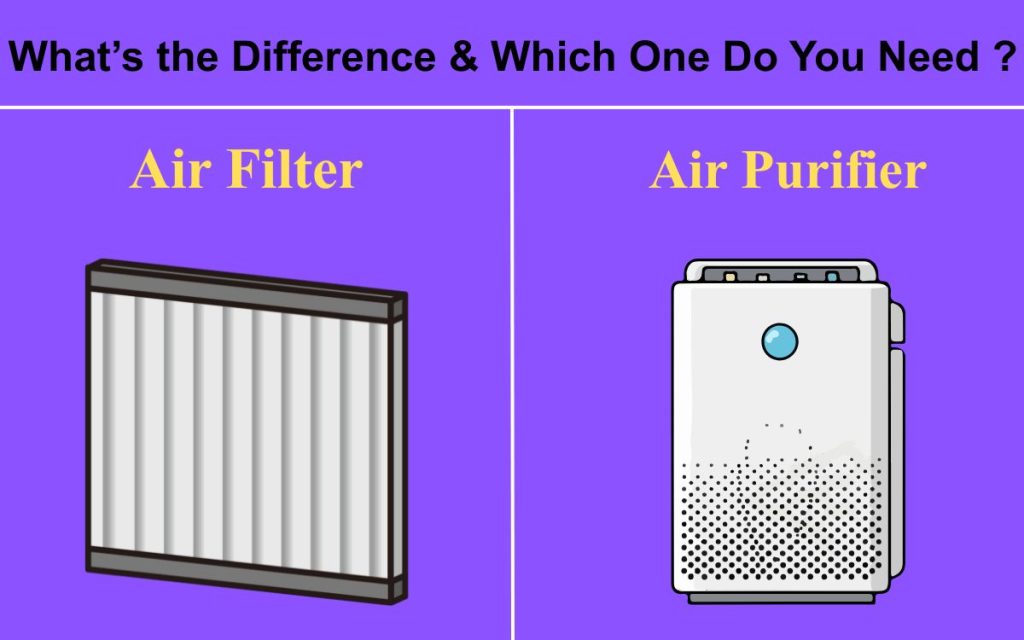
Air Filter vs Air purifier- what’s the difference & Which one do you need? Lets clear all your doubts through this article. Your home probably does not scream but you can imagine it is full of dust, mites basking in sunbeams coming through your Windows, pet dander resting on the couch and invisible pollutants from your cooking or cleaning supplies moving from room to room.
That is right your indoor air can be 2.5 times more polluted then outdoor air according to the Environment protection agency (EPA). That is an unnerving state when you consider how much time you spend in dwellings.
Purchasing the wrong devices results in financial loss and even worse the respiratory problem persists. But knowing how this technology works is the first step to breathing easier.
This guide will focus on the exact roles of air filters and air purifiers and compare their cost effectiveness and effectiveness technology. By the end you will have a clear idea of which tool you need to address the air quality problem specific to your home.
Understand MERV and HEPA Ratings
No matter what kind of scrubbing task you need to be done, it is sure to be an ideal filter solution may be there. It is even one design especially for you. Filters are given a Marv rating from 1 (least effective) up to 16 (Most Efficient).
1 to 4 MERV filters are affordable fiberglass filters that efficiently capture only large particles providing relief from Allergies. Plated filters MERV 5 to 8 are mostly found in a residential setting. Pleated filters capture mold spores, dust mites and pet dander to provide relief from allergy sufferers.
This superior performing media capture 1000 more small particles. Such as lead dust auto emissions, legionella (airborne bacteria that causes legionnaires disease). Further more MERV 13-16 media providers home and office system with effective protection from smoke particles carrying bacteria or virus carriers that could pose the biggest threats. This truly provides best of filtration.
HEPA (High-Efficiency Particulate Air) builders may catch your attention with their climb of trapping 99.97 % particles of small size like 0.3 Micron. Although true HEPA filters do improve air quality considerable. True HEPAs should generally not be placed directly in front of residential HVAC equipment as their densely packed filtration media may case performance and operational issue which furnace and fan Motors.
Common Purification Technologies
There are generally multiple technology in air purification to help other specific issue:
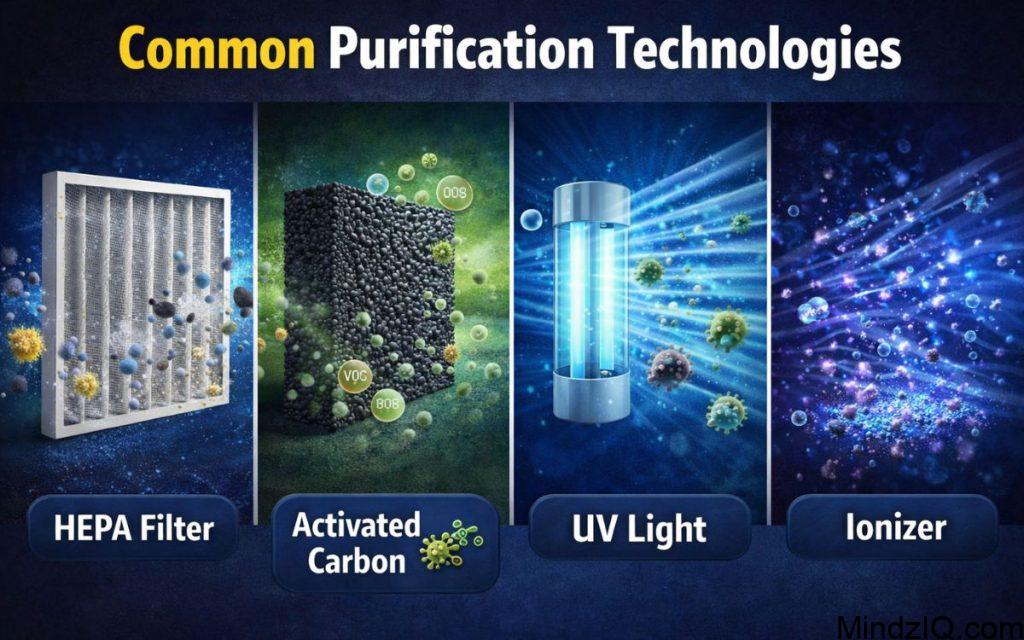
HEPA Filtration: As in more expensive filters, HEPA does the heavy lifting. Because purifiers come with their own dedicated Motors. They are able to battled the heft of resistance in a HEPA filter, Scrub pollen, mold and bacteria from your air.
UV-C light: A few Purifiers have an ultraviolet light chamber. As air moves through the UV light neutralizes germs in the air including viruses and bacteria.
Ionic generators: Emit negatively charged ions that attached to positively charged particles (such as airborne dust). Particles weigh down and fall or adhere to the walls. Some ionizers work by producing ozone, a lung irritant so be careful when using an ionizer to purify the air.
Difference Between Air Filters and Air Purifiers
Though both devices purify air, each has different scope of work in mind and this comparison helps make clear which gaps exist within your home setup.
Scope of Coverage
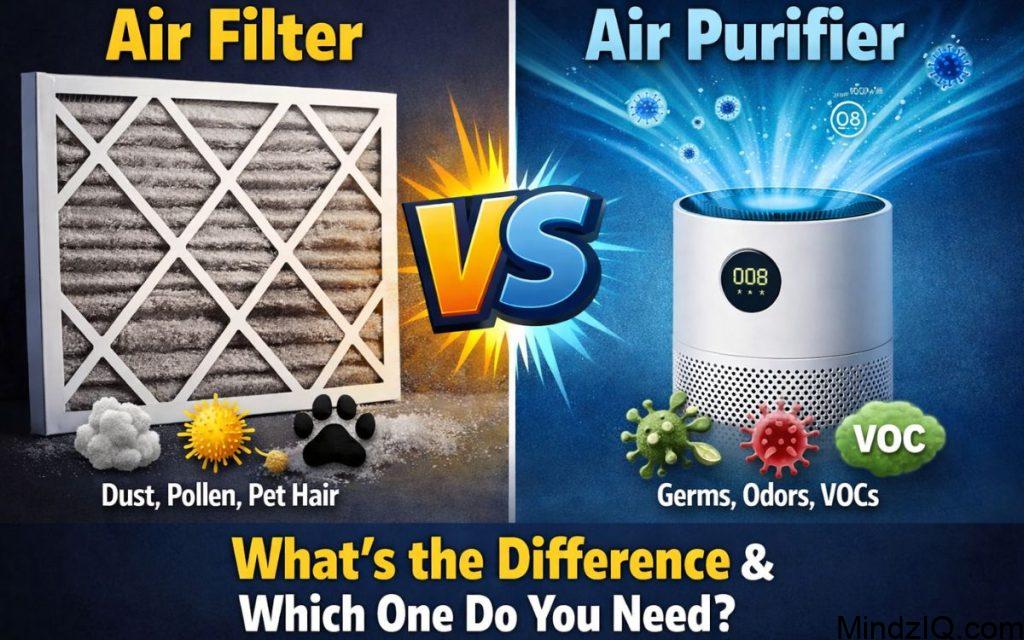
Air Filters: Within your central system, the air filters are responsible for filtering all of the air in your home whether it would be heat or AC, otherwise 0% of your air would ever be filtered! If they weren’t there, then there would be no filter to do any work at all!
Air Purifiers: Air purifiers address individual problems and some models such as the 250 sq. ft bedroom purifier. Unfortunately, there’s nothing you can do if you’ve got the bugger running full and hard upstairs in short burning of the house down!
Pollutant targeting
Air Filters: They’re great at filtering particulate matter such as dust, lint, pollen and dandruff. However their performance in regards to gases such as chemical fumes or odors may vary significantly depending on your system and price point.
Air purifier: Everything depending on the model. The only really effective line of defense you have against gaseous pollutants such as say formaldehyde off gassing from new furniture or a kitchen mishap is a purifier with a carbon filter.
Maintenance and Cost
Air Filters: Initial investment can be minimal; purchasing an affordable MERV 8 filter should run you no more than $10 or so. However, replacing them every 1 to 3 months is unavoidable and thus, over time the maintenance cost remains minimal; though more often than not this maintenance cost remains constant.
Air purifiers: Starting costs tend to range from $100 and well over $1,000, with replacement filters costing between $40-100 but generally lasting 6 months to one year. You should also keep electricity costs in mind since these units don’t depend on HVAC for their operation.
Benefits of Air Filters
Consistent, Whole Home Clean: With over 108 years of engineering, this air purifier is perfect for the whole home and reducing up to 99% of airborne particles as small as microns from the air.
Equipment Protection: They do help in adding life to your costly heater and AC.
Save space: They are hidden on your walls or ceiling. There is no large appliance sitting on the ground.
Simplicity: You don’t have to remember to turn them on or off; they are automatic with your climate control once installed.
Benefits of Air Purifiers
Targeted Relief: If you have asthma and your partner doesn’t, you can keep a purifier running in only the bedroom, so you develop what Dr. Marr calls a “safe zone” for sleep, insulating yourself from allergens all day long.
Odor Control: Ideal for larger homes with pets, smokers or open concept kitchens (cooking odors).
Enhanced Sanitation: For those with weakened immune systems, having the ability to capture viruses and bacteria using HEPA and UV technology can give them peace of mind with a typical HVAC filter cannot.
24/7 Operation: Easily runs 24 hours a day for continuous air cleaning, even when the home’s heating or cooling system is not in operation.
The Right Choice That Will Enable You To Breathe Easier
There is no singular cure all remedy for indoor air quality problems, and in reality the majority of people are going to get the most out of having several lines of defense fired off simultaneously.
Beginning at your HVAC system. TOP! If it’s a puny, transparent filter that you can see nothing through, get on over to the home store and pick up one that is pleated and rated MERV 8 or 11 (or even better yet, have one shipped online), because everyone in that house will thank you for the switcheroo of equipment at minimal cost.
If you’re still detecting any lingering odors or if your nose gets stuffed up after a night of sleep, or if you have health concerns that concern you, it’s time to bring in the big guns. An air purifier is a dedicated cleaning device, and zeroed in on tiny pollutants that the rest of your central system can’t catch. By recognizing the benefits of each type and including one in your room design it makes sure you’re breathing as clean air supply as possible.
Read More: Event-Driven Home Automation Architecture: The Smart and Complete Guide.